

How to Cut Back on Caffeine Without Headaches — Week-by-Week Taper Plan
Most people who try to cut back on caffeine make the same mistake: they stop cold turkey, spend two days in headache hell, decide it is impossible, and go straight back to their usual intake. The problem is not their willpower. The problem is their method. Cold turkey with a high caffeine habit triggers a predictable physiological withdrawal that is genuinely unpleasant — and completely avoidable with the right approach.
The evidence-based way to cut back on caffeine without headaches is a structured taper: reducing intake by 10–25% per week rather than eliminating it overnight. This gives your brain time to downregulate the adenosine receptors it has upregulated in response to chronic caffeine blockade. The result is a smooth, manageable reduction with minimal headaches, minimal fatigue, and a significantly higher success rate than cold turkey. This guide gives you the full week-by-week plan, exact milligram targets, drink substitution strategies, and a complete withdrawal symptom timeline so you know exactly what to expect and when.
Why Cutting Back on Caffeine Causes Headaches — The Biology Explained
Understanding why caffeine withdrawal headaches happen makes the taper approach make immediate sense. Caffeine works by blocking adenosine receptors — the receptors that tell your brain you are tired. In response to this chronic blockade, your brain compensates by upregulating adenosine receptors: it creates more of them, making the system more sensitive, so that despite caffeine occupying some receptors, enough remain available to maintain normal adenosine signalling.
When you suddenly remove caffeine, those now-excessive adenosine receptors all become simultaneously available. The flood of adenosine hitting all those extra receptors produces an exaggerated fatigue and drowsiness response — the “I cannot get off the sofa” feeling of caffeine withdrawal. Simultaneously, caffeine’s vasoconstriction effect disappears. Your brain blood vessels, previously narrowed by caffeine, suddenly dilate. This rapid vasodilation causes the characteristic throbbing caffeine withdrawal headache — typically felt behind the eyes or across the forehead, similar to a tension headache.
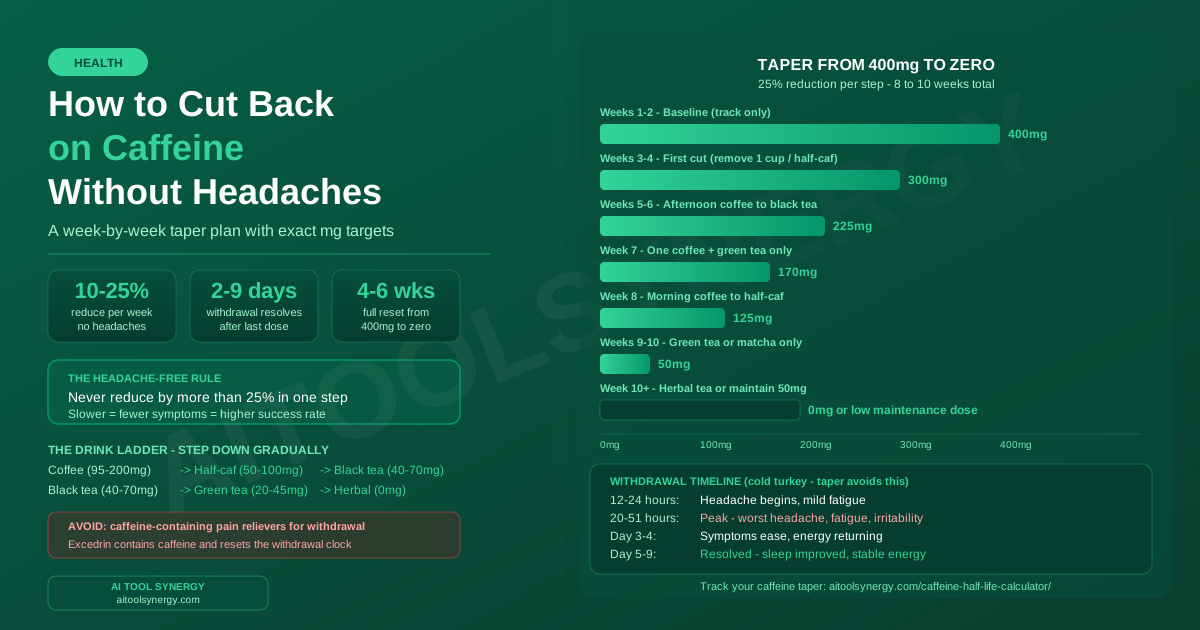
As confirmed by NIH StatPearls clinical review, withdrawal symptoms typically begin within 12–24 hours of the last dose, peak at 20–51 hours, and resolve within 2–9 days. In heavy users consuming 600mg or more per day, symptoms can persist up to two weeks. Gradual tapering prevents this cascade by allowing receptor density to decline gradually alongside intake — so the system never undergoes the sudden, dramatic shift that produces severe symptoms.
How to Cut Back on Caffeine — Assess Your Baseline First
Before starting any taper, you need an accurate picture of how much caffeine you actually consume each day. Most people significantly underestimate their intake because they forget to count tea, energy drinks, pre-workout supplements, soft drinks, dark chocolate, and certain medications. A single Starbucks Grande filter coffee contains around 310mg of caffeine — nearly the entire FDA guideline for a healthy adult — so even a two-coffee-per-day habit can represent 400–500mg if the servings are large.
Use the free caffeine half-life calculator to log exactly what you consume and when, and see how much total caffeine you are ingesting daily. The calculator also shows how much caffeine is still active in your system at bedtime — a powerful motivator for anyone reducing caffeine to improve sleep. Visit the caffeine half-life calculator to get started. Enter each drink type and quantity to get a precise total. This baseline number is your Week 1 starting point for the taper schedule below.
| Drink | Serving Size | Caffeine (mg) | Notes |
|---|---|---|---|
| Filter / drip coffee | 240ml (8oz) | 95-200mg | Highly variable — large cups can be 300mg+ |
| Espresso (single shot) | 30ml (1oz) | 63-75mg | Concentrated but small volume |
| Starbucks Grande filter | 470ml (16oz) | ~310mg | One of the highest commercial options |
| Energy drink (Monster/Red Bull) | 473ml (16oz) | 150-160mg | Often underestimated |
| Pre-workout supplement | 1 scoop | 150-300mg | Huge variation between brands |
| Black tea | 240ml (8oz) | 40-70mg | Useful intermediate taper step |
| Green tea | 240ml (8oz) | 20-45mg | Good final taper step |
| Decaf coffee | 240ml (8oz) | 2-15mg | Not truly caffeine-free but close |
| Cola / soft drink | 355ml (12oz) | 34mg | Often forgotten source |
How to Cut Back on Caffeine Without Headaches — The Week-by-Week Taper Plan
The following schedule assumes a starting intake of 400mg per day — roughly four standard cups of coffee. If your baseline is different, scale the mg targets proportionally: reduce by 25% per step rather than following the absolute numbers. The rate of reduction (25% every 1-2 weeks) is what prevents headaches, not the specific milligram values.
Cut Back on Caffeine — The Withdrawal Symptom Timeline
Even with a careful taper, you may experience mild withdrawal during reduction steps. Knowing the timeline prevents panic and helps you stay the course rather than reaching for extra coffee when symptoms appear.
With a 25% per week taper, most people experience little or no symptoms during each reduction step — mild fatigue for a day or two at most, rather than the full withdrawal headache sequence. The symptoms above describe what happens with cold turkey or excessively rapid reduction. If you experience significant symptoms during a taper step, slow down: stay at your current level for an additional week before reducing further.
How to Cut Back on Caffeine — Drink Swap Strategy
One of the most effective tools for cutting back on caffeine without headaches is strategic drink substitution. The goal is to preserve the ritual while reducing the dose — because much of what people miss when cutting back is not the caffeine itself but the habit structure, warmth, and taste association that coffee provides.
The drink ladder approach — coffee to black tea to green tea to herbal tea — is particularly effective because each step reduces caffeine meaningfully while maintaining the warm drink ritual. As noted by the Cleveland Clinic, many people find that once they experiment with tea alternatives, the perceived need for coffee diminishes because the ritualistic component of the habit is being met, even if the stimulant dose is lower.
How to Cut Back on Caffeine — Managing Withdrawal Symptoms Effectively
Even the most careful taper may produce some mild discomfort during reduction steps, particularly if your starting dose was high or if you reduce faster than the recommended pace. These strategies reduce symptom severity significantly:
Stay well hydrated
Caffeine is mildly diuretic — it increases urine output. Dehydration independently causes headaches that are identical to caffeine withdrawal headaches and significantly amplifies any withdrawal head pain. Drink at least 8-10 glasses of water daily during your taper, more if you exercise. This alone reduces headache frequency and intensity noticeably.
Maintain consistent sleep timing
Irregular sleep amplifies every symptom of caffeine withdrawal. Your adenosine system is recalibrating — disrupting it further with irregular sleep timing creates a compounding fatigue effect. Keep a fixed wake time and bedtime during your taper, even on weekends. As caffeine intake reduces, your sleep quality typically improves fairly quickly — this is one of the tangible early benefits that motivates continued reduction. Check your sleep improvement using your personal clearance timeline from the caffeine half-life calculator.
Use light exercise for energy dips
During the first week after each reduction step, afternoon energy dips are common as your body adjusts to lower caffeine. A 10-15 minute brisk walk — ideally outdoors — is more effective at restoring energy at these moments than caffeine would be, because it directly increases dopamine and norepinephrine without using adenosine receptor blockade. It also accelerates the adenosine receptor recalibration process.
Eat regular, balanced meals
Blood sugar instability amplifies caffeine withdrawal fatigue dramatically. If you are simultaneously reducing caffeine and skipping meals or eating high-sugar, low-protein foods, withdrawal fatigue will feel far more severe. Regular meals with protein, fibre, and healthy fats stabilise blood glucose and give the brain a reliable non-caffeine energy source.
Use ibuprofen for headaches — not caffeine-containing analgesics
Standard ibuprofen (400-600mg) or paracetamol (500-1000mg) effectively manages caffeine withdrawal headaches. The critical caveat: check that the pain reliever does not contain caffeine. Excedrin, Anadin Extra, and many migraine-specific formulations contain 65-130mg of caffeine per dose. Taking these relieves the headache by re-caffeinating — resetting the withdrawal clock and prolonging the process.
How to Cut Back on Caffeine — Why Slow Beats Fast Every Time
Cold turkey caffeine reduction has a high failure rate precisely because the symptoms it produces are severe enough to convince people that they cannot function without caffeine — which reinforces the belief that caffeine is necessary rather than habitual. A gradual taper sidesteps this by keeping symptoms manageable throughout, allowing the experience of reduced caffeine to gradually feel normal rather than deficient.
According to the NIH clinical review of caffeine withdrawal, gradual tapering of caffeine — reducing by 25% to 50% every few days — is the most effective method to prevent withdrawal symptoms, particularly in heavy users. The slower the reduction, the less dramatic the physiological adjustment required at each step. Even if the total taper takes 6-8 weeks, this approach is faster in practice because it does not lead to the relapses that repeatedly reset cold turkey attempts.
For people cutting back primarily to improve sleep rather than eliminate caffeine entirely, you may only need to reduce by 1-2 steps before reaching the level and timing that resolves the sleep disruption. Use the caffeine half-life calculator to model the difference in overnight caffeine levels between your current intake and a reduced dose — many people find that dropping from 400mg to 200mg and moving the last coffee two hours earlier produces dramatic sleep improvement without requiring full elimination. Our full guide on how caffeine affects sleep explains exactly what changes in your sleep architecture at each dose level.
Cut Back on Caffeine — What to Expect After You Succeed
The benefits of successfully reducing caffeine intake become apparent within the first week to two weeks and grow progressively over the following month. The most commonly reported improvements include more stable energy throughout the day — without the pronounced peaks and crashes that characterise high caffeine consumption. Morning energy improves significantly, because without caffeine debt accumulated from poor sleep, the cortisol awakening response does its job without needing caffeine to compensate.
Sleep quality is typically the first measurable improvement. As covered in detail in our guide on how caffeine affects sleep, high caffeine consumption suppresses slow-wave (deep) sleep even when you fall asleep at a normal time. Within 1-2 weeks of meaningful caffeine reduction, most people notice they feel more genuinely rested after the same number of hours in bed — because their deep sleep duration and quality has increased.
For people who reduced caffeine because of anxiety symptoms, improvement typically follows the same 1-2 week timeline, with the most noticeable change being reduced baseline nervousness and fewer episodes of heart pounding or jitteriness. The relationship between caffeine and anxiety is dose-dependent — below your personal anxiety threshold, caffeine’s benefits (alertness, focus, mood elevation) remain while the adverse effects reduce significantly.
If the goal is better morning energy rather than full elimination, understanding your personal caffeine half-life and optimising when you drink rather than how much can be equally effective. Our guide on the best time to drink coffee for energy and our caffeine half-life calculator guide cover the timing optimisation approach in full.
How to Cut Back on Caffeine — Summary
Cutting back on caffeine without headaches is entirely achievable with the right method. The key is a 10–25% weekly reduction rather than cold turkey, drink substitutions that preserve the ritual while reducing the dose, consistent sleep and hydration during the taper, and ibuprofen (not caffeine-containing pain relievers) for any breakthrough headaches. The week-by-week plan above takes a 400mg-per-day habit to zero in 8-10 weeks with minimal symptoms at each step.
Whether your goal is eliminating caffeine entirely, reducing anxiety symptoms, improving sleep quality, or simply resetting your tolerance so caffeine works effectively again, the taper approach is more effective and more sustainable than willpower-based cold turkey. Start by measuring your exact baseline with the free caffeine half-life calculator, then apply the 25% weekly reduction — and within two weeks you should notice the first meaningful improvements in sleep, energy stability, and anxiety.