


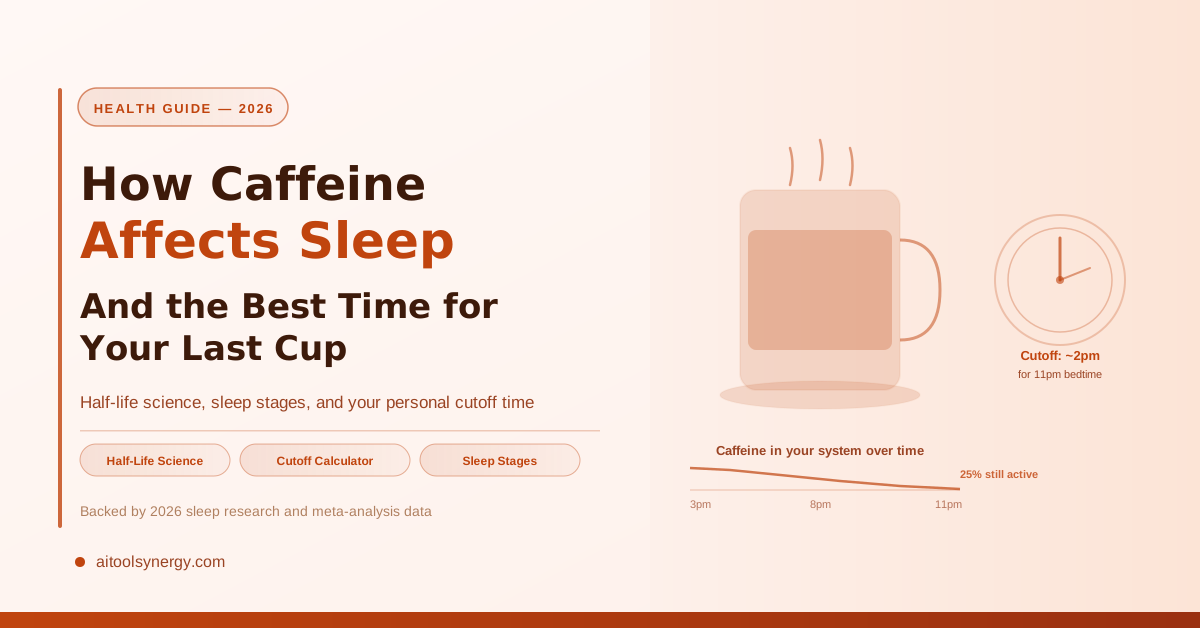
Most people know that drinking coffee too late can affect sleep. What most people don’t know is how dramatically they’re underestimating “too late.” If you had a coffee at 3pm today, roughly 25% of that caffeine is still circulating in your system at 11pm — silently reducing your deep sleep and fragmenting your REM cycles even if you fall asleep with no trouble at all.
This guide covers the complete science of how caffeine affects sleep — what it actually does to your brain, how long it really stays in your system, how it disrupts every sleep stage, and how to find your personal caffeine cutoff time. You’ll also learn why some people seem immune to evening espresso (it’s genetic), why poor sleep creates a vicious caffeine dependency cycle, and get a full comparison table of caffeine content across 12+ common drinks.
By the end, you’ll know exactly when to have your last cup — backed by research, not guesswork.
Why Caffeine and Sleep Are More Connected Than You Think
Caffeine is the most widely consumed psychoactive substance in the world. According to the Sleep Foundation, over 90% of American adults consume caffeine regularly — most of them daily. The global coffee market produces over 170 million bags per year, and that doesn’t account for tea, energy drinks, soft drinks, or the caffeine hidden in chocolate, ice cream, and medications.
At the same time, sleep deprivation has reached epidemic levels. The National Sleep Foundation’s 2025 Sleep in America Poll found that 6 in 10 adults don’t get the recommended amount of sleep, and nearly 4 in 10 have trouble falling asleep three or more nights per week. These two facts — the world’s most popular stimulant and a global sleep crisis — are not unrelated.
What makes this particularly significant is that many of these effects happen even when people feel like they slept fine. Caffeine doesn’t just keep you awake — it changes the quality of sleep you get while unconscious.
What Caffeine Actually Does to Your Brain
To understand why caffeine affects sleep so profoundly, you need to understand adenosine — a naturally occurring brain chemical that builds up throughout the day as a byproduct of cellular energy use. The longer you’ve been awake, the more adenosine accumulates in your brain, progressively creating what sleep researchers call sleep pressure — that heavy, tired feeling that makes you want to lie down.
When adenosine binds to its receptors, it sends “sleep now” signals throughout your nervous system. Your body temperature drops slightly, your heart rate slows, and your brain transitions from active alertness to the quieter rhythms of pre-sleep drowsiness. This is the natural mechanism that makes sleep feel restorative — the higher the adenosine buildup, the deeper and more restorative your subsequent sleep.
Here’s what caffeine does: it crosses the blood-brain barrier and physically occupies adenosine receptors without activating them. Think of it like putting a key in a lock that doesn’t turn. Caffeine molecules fit into the receptors but don’t trigger the sleep signals. Adenosine keeps accumulating — the sleep pressure is building — but the brain can’t detect it. You feel alert. You function. But the moment caffeine wears off, all that unprocessed adenosine floods the receptors simultaneously. That’s the caffeine crash.
As Matthew Walker, neuroscientist and author of Why We Sleep, explains: “Caffeine has a half-life of five to seven hours. If you drink a cup of coffee after your evening meal, at 10pm, this means that by 4am, 50% of that caffeine may still be active in your brain tissue.” The deceptive nature of caffeine is that it doesn’t stop adenosine from building — it just stops you from feeling it, while simultaneously degrading the sleep you eventually do get.
The Caffeine Half-Life — How Long It Really Stays in Your System
The caffeine half-life is the time it takes your body to eliminate 50% of the caffeine you consumed. For most healthy adults, this ranges from 2 to 10 hours, with an average of approximately 5 hours. The variation is significant — and it explains why two people who drink coffee at the same time can have completely different sleep experiences.
Here’s what the math looks like for a standard 200mg caffeine intake (roughly two cups of coffee) with a 5-hour half-life:
| Time After Consumption | Caffeine Remaining | Effect on Sleep |
|---|---|---|
| 1 hour | ~180mg (90%) | Peak alertness — do not sleep |
| 3 hours | ~130mg (65%) | Still highly stimulating |
| 5 hours | ~100mg (50%) | Half-life mark — still significant |
| 8 hours | ~50mg (25%) | Reduced but measurably affecting sleep |
| 10 hours | ~25mg (12.5%) | Minimal but still detectable in sleep stages |
| 15 hours | ~6mg (3%) | Negligible effect for most people |
Using this framework: if you drink 200mg of caffeine at 3pm and you sleep at 11pm, approximately 50mg (25%) of that caffeine is still active in your system when your head hits the pillow. That’s equivalent to a quarter of a cup of coffee — not negligible, especially if you’re a slow metabolizer.
Research published in the Journal of Sleep Research found that consuming caffeine even 6 hours before bedtime reduced total sleep time by 41 minutes. That’s a significant reduction in recovery for something as seemingly harmless as an afternoon cup.
Want to calculate your exact cutoff time? Our free Caffeine Half-Life Calculator takes your specific intake amount, time of consumption, and individual metabolic rate factors to give you a precise window.
How Caffeine Disrupts Every Stage of Your Sleep
Sleep is not a single state — it’s a complex cycle of distinct stages that your brain moves through approximately every 90 minutes. Each stage serves a specific biological function, and caffeine doesn’t affect all of them equally. Understanding what happens to each stage helps explain why caffeine-affected sleep can leave you feeling unrested even after 8 hours in bed.
Light Sleep (N1 and N2)
Light sleep stages are less severely disrupted by caffeine, though they do show some increase in duration. This creates a misleading situation where the overall sleep time appears normal — because you spend more time in lighter stages — while the restorative stages are compressed.
Deep Sleep (N3 — Slow-Wave Sleep)
Deep sleep is where caffeine does the most damage. This is the physically restorative stage where tissue repair happens, growth hormone is released, and the immune system consolidates its defenses. Caffeine has been consistently shown to reduce the duration of deep sleep, particularly in the first half of the night when deep sleep is most concentrated. Studies using polysomnography show that even moderate caffeine doses reduce slow-wave sleep by 10–20%.
REM Sleep (Rapid Eye Movement)
REM sleep — where dreaming occurs and emotional memory consolidation happens — is disrupted differently. Caffeine delays REM onset and fragments REM periods throughout the night. A 2025 study from LMU University Hospital Munich that tracked real-world caffeine habits using wearables found significant REM disruption even at moderate caffeine doses consumed 4–6 hours before sleep.
Caffeine Content in Common Drinks — Ranked From Highest to Lowest
To calculate your real caffeine exposure, you need accurate numbers. The caffeine content of drinks varies more than most people realise — and some surprises are in this list.
| Drink | Serving Size | Caffeine (mg) | Equivalent Half-Life Impact (5hr average) |
|---|---|---|---|
| Energy drink (Monster, Red Bull) | 16 oz / 473ml | 150–160mg | 75–80mg still active after 5 hours |
| Drip / filter coffee | 8 oz / 240ml | 80–120mg | 40–60mg still active after 5 hours |
| Espresso (double shot) | 2 oz / 60ml | 120–130mg | 60–65mg still active after 5 hours |
| Cold brew coffee | 8 oz / 240ml | 100–200mg | Highly variable — check brand |
| Espresso (single shot) | 1 oz / 30ml | 60–75mg | 30–37mg still active after 5 hours |
| Instant coffee | 8 oz / 240ml | 60–80mg | 30–40mg still active after 5 hours |
| Black tea | 8 oz / 240ml | 40–70mg | 20–35mg still active after 5 hours |
| Matcha | 8 oz / 240ml | 35–70mg | 17–35mg still active after 5 hours |
| Green tea | 8 oz / 240ml | 25–45mg | 12–22mg still active after 5 hours |
| White tea | 8 oz / 240ml | 15–30mg | 7–15mg still active after 5 hours |
| Coca-Cola | 12 oz / 355ml | 34mg | 17mg still active after 5 hours |
| Dark chocolate (1 oz) | 28g square | 12–25mg | Often overlooked evening intake |
| Decaf coffee | 8 oz / 240ml | 2–15mg | Not truly caffeine-free |
| Herbal tea | 8 oz / 240ml | 0mg | No caffeine impact |
Two important notes from this table: cold brew can contain significantly more caffeine than regular drip coffee depending on the brand and preparation — some cold brews approach 300mg per serving. And decaf is not zero caffeine — it typically contains 2–15mg per cup, which can matter for highly sensitive individuals or those with extended half-lives.
How to Find Your Personal Caffeine Cutoff Time
The commonly cited rule is “stop caffeine at 2pm.” For many people, this is reasonable. But it’s based on the average 5-hour half-life and assumes a 10pm bedtime. Your ideal cutoff depends on three variables: your bedtime, your caffeine half-life, and how much you consumed.
Cutoff Time = Bedtime − (Half-Life × 2)
Multiplying by 2 ensures that only about 25% of the caffeine remains at bedtime — the threshold below which most people see minimal sleep disruption. If your half-life is 5 hours and you sleep at 11pm:
Cutoff = 11pm − (5 × 2 hours) = 11pm − 10 hours = 1pm
If your half-life is longer — say 7 hours, which is common in older adults — your cutoff should be:
Cutoff = 11pm − (7 × 2 hours) = 11pm − 14 hours = 9am
For slow metabolizers, that means no caffeine after their morning cup.
Most people don’t know their exact half-life, and that’s where estimation matters. General guidelines by metabolizer type:
| Metabolizer Type | Typical Half-Life | 10pm Bedtime Cutoff | 11pm Bedtime Cutoff |
|---|---|---|---|
| Fast metabolizer (young, non-smoker) | 2–4 hours | 2pm–6pm | 3pm–7pm |
| Average metabolizer | 4–6 hours | 10am–2pm | 11am–3pm |
| Slow metabolizer (older adults, some genetics) | 6–10 hours | 2am–10am | 3am–11am |
| Pregnancy (later stages) | Up to 14 hours | No afternoon caffeine | Morning only |
Use our free Caffeine Half-Life Calculator to get a precise cutoff time based on your specific intake, consumption time, and personal factors. It calculates the exact hour when caffeine drops below the 25% threshold for your situation.
Why Some People Can Drink Coffee Before Bed — The Genetics Factor
You almost certainly know someone who can drink a double espresso after dinner and sleep like a log. You might assume it’s a superpower. It’s actually genetics — and understanding it explains a lot about why caffeine affects everyone differently.
The primary gene involved is CYP1A2, which encodes the liver enzyme responsible for metabolizing approximately 95% of the caffeine you consume. People with a specific variant of this gene (often called “fast metabolizers”) break down caffeine roughly twice as fast as average, giving them an effective half-life as low as 2–3 hours. By bedtime, there’s genuinely almost no caffeine left in their system.
Fast CYP1A2 metabolizers represent approximately 40–50% of the population. The remaining 50–60% are average to slow metabolizers, for whom evening caffeine has measurable sleep consequences — even if they don’t consciously notice them.
A second gene — ADORA2A — controls the sensitivity of adenosine receptors themselves. Variations in this gene determine how strongly the brain responds to caffeine’s adenosine-blocking effect. Some people with specific ADORA2A variants feel intense caffeine effects from small amounts, while others with different variants feel relatively little effect even from large doses.
The practical takeaway: if you’re in the “I can drink coffee at night and sleep fine” camp, you’re likely a fast CYP1A2 metabolizer. If you’re highly sensitive to caffeine — one coffee after noon and you’re staring at the ceiling — you’re likely a slow metabolizer or have a high-sensitivity ADORA2A variant. Neither is better or worse. They’re simply different genetic starting points that require different caffeine strategies.
The Vicious Cycle — How Bad Sleep Creates More Caffeine Dependency
Here’s the part that most caffeine articles skip entirely — and it’s arguably the most important: caffeine and poor sleep form a self-reinforcing cycle that progressively deepens both problems.
It works like this: poor sleep leaves adenosine partially uncleared from the brain. You wake up feeling tired — not because the day’s sleep pressure hasn’t reset, but because last night’s sleep was too shallow to fully process it. You reach for caffeine to compensate. The caffeine blocks adenosine detection again, keeps you functional, and then wears off — leaving that cumulative adenosine debt still waiting. The next night’s sleep is slightly worse. You need slightly more caffeine the next morning. The cycle continues.
This is what caffeine dependency actually looks like for most regular coffee drinkers. It’s not dramatic — it’s a slow drift where baseline tiredness gradually rises and baseline caffeine intake gradually rises alongside it. Many people don’t notice because the caffeine mask is always in place. They only notice when they try to stop or reduce intake: the adenosine debt surfaces all at once as withdrawal headaches and profound fatigue.
The Sleep Foundation notes that this vicious cycle is one of the primary reasons caffeine dependency develops in otherwise healthy adults — not because of the initial stimulation, but because of the cumulative sleep quality debt it creates over time.
Signs Caffeine Is Affecting Your Sleep (Even When You Think It’s Not)
The challenge with caffeine-disrupted sleep is that it often doesn’t feel disrupted. You fall asleep. You stay asleep. You wake up at a normal time. But the quality of sleep is quietly diminished — less deep sleep, less REM, more light sleep — and the consequences show up in your waking hours rather than your nighttime experience.
Watch for these signs that your caffeine intake may be silently affecting your sleep quality:
- You wake up feeling unrested despite getting 7–8 hours in bed
- You need caffeine within the first 30 minutes of waking just to feel functional
- You feel a significant energy dip between 1pm and 3pm every day
- Your sleep feels lighter or more fragmented than it used to
- You dream less than you used to (REM reduction)
- You feel irritable or foggy in the late morning before your second coffee
- You struggle to nap even when genuinely tired — caffeine may still be active
- You feel significantly better on weekends when you wake naturally — but use this to “catch up” on sleep
- Reducing or skipping caffeine for one to two days causes headaches (adenosine withdrawal)
- Your overall daily energy feels flat, with peaks only when caffeinated
If four or more of these apply to you, there’s a reasonable chance your caffeine timing is disrupting your sleep quality enough to affect how you feel during the day.
Age, Pregnancy, and Other Factors That Change Your Caffeine Half-Life
Your individual caffeine half-life isn’t fixed — it changes based on several biological and lifestyle factors. Here’s what shifts it significantly:
Age
Caffeine half-life generally increases with age. The liver enzyme activity responsible for caffeine metabolism (CYP1A2) tends to decline as we age, meaning older adults eliminate caffeine more slowly. The same cup of coffee that cleared your system in 4 hours at age 25 may take 6–7 hours at age 55. This is a primary reason why sleep problems often become more noticeable with age even without changing caffeine habits.
Pregnancy
Caffeine half-life increases dramatically during pregnancy — up to 14 hours in the third trimester, compared to the 5-hour average for non-pregnant adults. This is why health authorities including the CDC recommend limiting caffeine to under 200mg per day during pregnancy. At a 14-hour half-life, even a morning coffee may still be partially active at bedtime.
Smoking
Smokers metabolize caffeine roughly 50% faster than non-smokers. Compounds in tobacco smoke induce CYP1A2 enzyme activity, accelerating caffeine elimination. This partly explains why smokers tend to consume more coffee — the stimulant effect wears off faster. When smokers quit, their caffeine half-life increases and they often experience stronger caffeine effects from previously normal intake.
Oral Contraceptives
Hormonal contraceptives approximately double caffeine half-life in some women, from an average of 5 hours to around 8–10 hours. This is a frequently overlooked factor for women experiencing increased caffeine sensitivity or sleep disruption after starting oral contraceptives.
Liver Function
Since caffeine is processed almost entirely in the liver, any liver dysfunction significantly extends the half-life — up to 96 hours in cases of severe liver disease. For most healthy adults this isn’t a concern, but it’s worth noting for anyone with known liver conditions.
How to Reduce Caffeine’s Impact on Your Sleep — Practical Steps
Find Your Actual Cutoff Time
Use our Caffeine Half-Life Calculator to find the specific time you should stop based on your bedtime and estimated metabolizer type. For most people aiming for an 11pm bedtime with an average metabolism, this is around 1–2pm. For slower metabolizers it may be earlier.
Time Your Morning Caffeine Strategically
Cortisol — your body’s natural wake-up hormone — peaks approximately 20–30 minutes after waking. During this window, your body is already at its natural alertness peak, which means caffeine consumed immediately upon waking is less effective and can increase tolerance faster. Try waiting 60–90 minutes after waking before your first coffee to let cortisol peak naturally, then use caffeine as a genuine boost when it starts to wane.
Switch to Lower-Caffeine Alternatives After Your Cutoff
The ritual of a warm drink in the afternoon or evening doesn’t have to mean caffeine. Herbal teas (completely caffeine-free), golden milk, warm lemon water, or decaf (minimal caffeine) can maintain the habit without the sleep impact. Many people find that 70% of their desire for afternoon coffee is the ritual and warmth rather than the stimulant effect.
Don’t Use Caffeine to Compensate for Poor Sleep
If you find yourself needing progressively more caffeine just to maintain baseline function — not for performance, but just to feel awake — this is a signal to address sleep quality rather than increase caffeine intake. Breaking the vicious cycle usually requires a short period of deliberate caffeine reduction (expecting 1–3 days of increased tiredness as adenosine debt clears) combined with improved sleep hygiene.
Track Your Sleep Quality, Not Just Duration
If you have access to a sleep tracker (Oura Ring, Garmin, Fitbit, Apple Watch), monitor your deep sleep and REM percentages rather than just total hours. Experiment with moving your caffeine cutoff earlier by one hour and observe whether deep sleep duration increases. Most people see measurable improvement within 3–5 days of consistent earlier cutoff times.
Calculate Your Personal Caffeine Cutoff Time
Stop guessing when to have your last cup. Our free Caffeine Half-Life Calculator tells you exactly when to stop based on your intake, metabolism, and target bedtime. No signup required.
Calculate My Cutoff Time →






5 Responses
[…] This is why so many regular caffeine users sincerely believe their sleep is unaffected by afternoon coffee — the subjective feeling of alertness has genuinely worn off, but the objective physiological effects on sleep architecture persist. Research cited by the Sleep Foundation confirms that sleep disruption from caffeine occurs even when subjects report no perceived stimulant effect. For everything that caffeine does to sleep stages specifically, read our detailed guide on how caffeine affects sleep. […]
[…] Articles HealthHow Caffeine Affects Sleep & Your Best Cutoff Time HealthCaffeine Half Life Calculator — How Long Does It Stay in Your System? HealthWhat Is a […]
[…] headaches) will reset the baseline and reveal your true rested energy levels. Our detailed guide on how caffeine affects sleep covers the dependency cycle and exactly how to break […]
[…] the next day than the immediate stimulant effect of the coffee itself. Our detailed guide on how caffeine affects sleep covers this mechanism in […]
[…] earlier produces dramatic sleep improvement without requiring full elimination. Our full guide on how caffeine affects sleep explains exactly what changes in your sleep architecture at each dose […]