

Coffee vs Energy Drinks vs Tea — Which Has the Least Impact on Your Sleep?
Most caffeine advice treats all caffeinated drinks as interchangeable — as if the only variable that matters is how many milligrams you consume. But when comparing coffee vs energy drinks vs tea, the source changes sleep impact beyond dose. A cup of green tea and a can of energy drink can contain identical amounts of caffeine and produce meaningfully different outcomes for your sleep architecture, next-morning energy, and long-term dependency patterns.
This guide compares coffee vs energy drinks vs tea for sleep impact — examining not just caffeine content but L-theanine buffering in tea, sugar-crash stacking in energy drinks, stimulant additives, absorption speed differences, and the direct evidence from a 2024-2025 real-world study that compared coffee and energy drink sleep impact under identical conditions.
Coffee vs Energy Drinks vs Tea — Why the Caffeine Source Matters for Sleep
Caffeine disrupts sleep through adenosine receptor blockade — caffeine occupies the receptors that would signal fatigue and sleep onset, delaying sleep pressure and suppressing slow-wave (deep) sleep. This mechanism is identical regardless of whether the caffeine comes from coffee, tea, or an energy drink.
But caffeinated drinks are not just delivery vehicles for caffeine. Each contains additional compounds that modify how quickly caffeine peaks in the bloodstream, how long the energy lasts, and what happens to blood sugar and cortisol — all of which subsequently affect sleep quality. The source of your caffeine, not just the dose, determines your sleep outcome that night.
Coffee vs Energy Drinks vs Tea — What the Research Actually Shows
The most directly relevant evidence is the LMU SleepSmart study — an observational cohort conducted at LMU Hospital Munich, Germany, from July 2024 to January 2025, published in Nutrients journal. It is the first study to directly compare the sleep impact of coffee versus energy drinks under real-world conditions using wearable sleep monitoring.
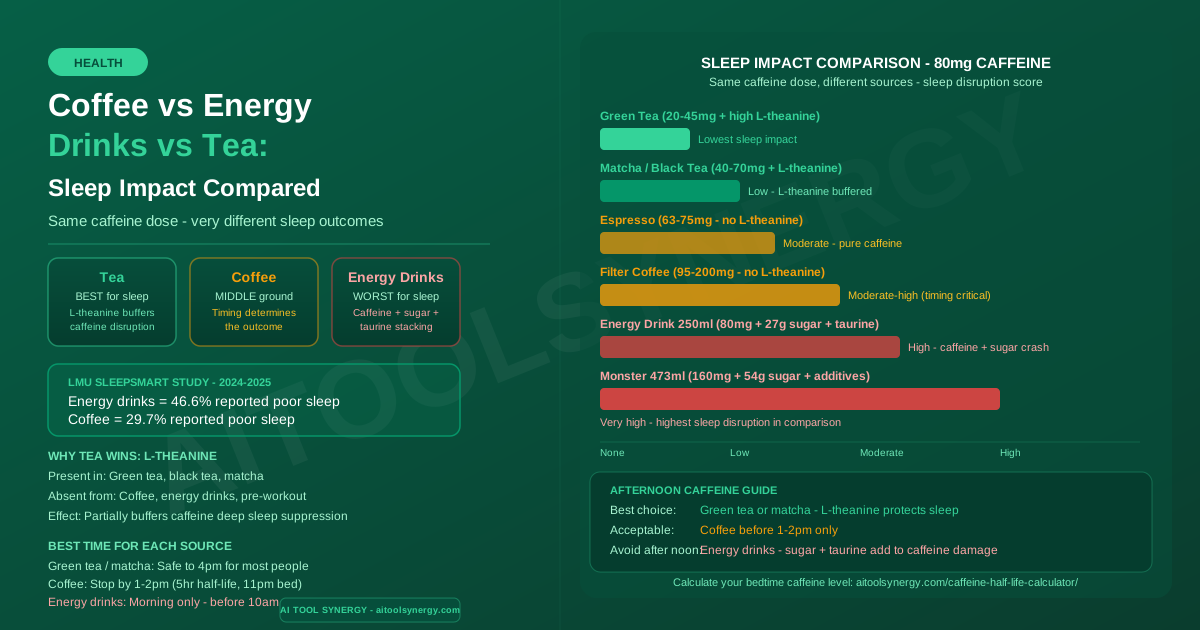
Participants consumed 240mg of caffeine either via coffee or via energy drink three hours before bedtime. The results were unambiguous. Poor sleep was reported by 29.7% of coffee consumers compared to 46.6% of energy drink consumers — a 20 percentage point difference at the same caffeine dose consumed at the same time before bed. The researchers concluded that non-caffeine components of energy drinks produce sleep-quality consequences beyond what caffeine alone explains.
For the tea comparison, a separate body of L-theanine research — including a study published in Pharmacology, Biochemistry and Behaviour — confirmed that L-theanine partially counteracts caffeine-induced suppression of slow-wave sleep, positioning tea as the lowest sleep-disruption caffeine source at equivalent doses.
Coffee vs Energy Drinks vs Tea — The Three-Way Verdict
Coffee vs Energy Drinks vs Tea — Sleep Impact by Caffeine Content
The table below shows caffeine content per serving and how much remains active at 11pm when the drink is consumed at 3pm under an average 5-hour half-life. Use the free caffeine half-life calculator to run your specific drinks and consumption times.
| Drink | Caffeine / Serving | Active at 11pm (3pm drink) | L-Theanine? | Added Sugar? | Sleep Rating |
|---|---|---|---|---|---|
| Green tea | 20-45mg | 5-11mg | Yes | No | Best |
| Matcha | 40-70mg | 10-17mg | Yes (high) | No | Best |
| Black tea | 40-70mg | 10-17mg | Yes | No | Good |
| Espresso (single) | 63-75mg | 16-19mg | No | No | Moderate |
| Filter coffee | 95-200mg | 24-50mg | No | No | Moderate (timing dependent) |
| Cold brew (8oz) | 150-250mg | 37-62mg | No | No | Poor (often underestimated) |
| Red Bull (250ml) | 80mg | 20mg | No | 27g | Poor (sugar + additives) |
| Monster (473ml) | 160mg | 40mg | No | 54g | Very poor |
| Pre-workout | 150-300mg | 37-75mg | No | Varies | Very poor if after noon |
Coffee vs Energy Drinks vs Tea — Why Tea Wins on Sleep Impact
The defining difference between tea and every other caffeinated drink in this comparison is L-theanine — an amino acid found almost exclusively in the leaves of Camellia sinensis (all true teas: green, black, white, oolong, and matcha). L-theanine is absent from coffee, absent from most energy drinks, and absent from pre-workout supplements.
L-theanine works through two mechanisms that directly reduce caffeine’s sleep disruption. First, it promotes alpha brainwave activity — associated with relaxed alertness rather than anxious stimulation. This means caffeine produces focused wakefulness rather than the over-arousal that makes falling asleep difficult. Second, L-theanine partially reverses caffeine’s suppression of slow-wave sleep — the most physically restorative sleep stage. Research from Examine.com summarising the clinical evidence confirms that L-theanine reduces caffeine’s blood pressure elevation and sleep disruption while preserving the cognitive focus benefit.
At equivalent caffeine doses, tea produces less sleep disruption than coffee because L-theanine moderates the quality of alertness caffeine creates — reducing the anxiogenic component that interferes with sleep onset — and partially protects slow-wave sleep architecture even when some caffeine remains active at bedtime.
Why Energy Drinks Are Worst for Sleep — The Stacking Effect
Energy drinks produce worse sleep than coffee not because their caffeine is fundamentally different, but because they stack multiple independent sleep-disrupting mechanisms simultaneously.
Sugar crash stacking
A standard Red Bull contains 27g of added sugar. A large Monster contains 54g. When blood glucose spikes rapidly and then crashes 1-2 hours later, the crash produces its own cortisol release and adrenal activation — a secondary stimulant wave arriving precisely when you are trying to wind down. As noted by University Hospitals, the blood glucose roller coaster from energy drink sugar creates fatigue and then another cortisol spike, worsening sleep onset and quality.
Taurine and stimulant additives beyond caffeine
Research published in PubMed found that energy drink consumption increased cardiac sympathetic activation significantly more than equivalent caffeine from coffee. Critically, this effect was independent of caffeine content — taurine and other additives were contributing additional sympathetic nervous system stimulation beyond what caffeine alone produces. Heightened sympathetic activation is directly antagonistic to sleep initiation and deep sleep.
Higher caffeine doses than perceived
Most people accurately estimate their coffee intake but underestimate energy drink caffeine. A large Monster at 160mg is equivalent to consuming two filter coffees at once. Pre-workout supplements at 150-300mg per scoop represent the highest single-dose caffeine event in most people’s day — and are frequently consumed at 5-7pm for afternoon training sessions, timing that guarantees significant overnight caffeine activity.
Coffee vs Energy Drinks vs Tea — Timing Recommendations by Source
Regardless of source, timing remains the most powerful variable in caffeine-sleep management. But each source has different timing implications due to dose and additional ingredient effects:
Green tea and matcha: The L-theanine buffer and low caffeine dose give the most flexible window. Green tea consumed up to 4pm is low-risk for most average metabolisers. Even those who are sensitive to caffeine can typically tolerate green tea until 3pm. See our caffeine sensitivity guide to identify your metaboliser type.
Black tea: Slightly higher caffeine than green tea but still L-theanine buffered. Safe to 3pm for average metabolisers. Treat like a light coffee for slow metabolisers.
Filter coffee: Apply the personal cutoff formula — Bedtime minus (Half-Life x 2). For an 11pm bedtime and 5-hour half-life, stop by 1pm. Cold brew requires an earlier cutoff due to higher caffeine content. The full timing guide is covered in our best time to drink coffee for energy article.
Energy drinks: Morning only — before 10am — for anyone who values sleep quality. The sugar crash and taurine activation add disruption that extends well beyond the caffeine half-life window. An energy drink at 2pm causes sleep problems that the caffeine half-life calculation alone would underestimate.
Use the caffeine half-life calculator to model your specific drinks, quantities, and timing. Enter each drink and consumption time to see exactly what caffeine level reaches your bedtime — then combine that with this source comparison to make the full picture.
Coffee vs Energy Drinks vs Tea — Practical Daily Strategy
The optimal caffeine-sleep strategy for most people does not require eliminating caffeine. It requires matching the right source to each part of the day.
Morning (before 10am): Any source acceptable. Coffee, tea, or a single energy drink if preferred. With a 5-6 hour half-life, morning caffeine is largely cleared before an 11pm bedtime. The main morning consideration is avoiding immediate post-waking caffeine during the cortisol awakening response — wait 60-90 minutes after waking. Full detail in our coffee timing guide.
Mid-morning (10am-noon): Coffee or tea both appropriate. This is the sweet spot for a second caffeine dose — the cortisol peak has subsided, adenosine has accumulated, and there is enough time before a typical bedtime for the caffeine to clear adequately.
Afternoon (noon-3pm): Tea strongly preferred over coffee. Green tea or matcha here keeps caffeine low and includes L-theanine protection. Coffee at 2pm or later begins to compromise sleep for average and slow metabolisers. Energy drinks in the afternoon add sugar crash and additive disruption on top of caffeine — avoid.
After 3pm: Herbal tea only. No coffee, no energy drinks. Green tea at 3pm is borderline safe for fast metabolisers but marginal for average and slow metabolisers. For those who find they need to cut back on caffeine, shifting the afternoon drink from coffee to green tea is one of the most impactful single changes available.
Coffee vs Energy Drinks vs Tea — Summary
The evidence-based ranking for sleep impact from least to worst is: tea (green/matcha) < black tea < coffee < energy drinks. Tea wins because L-theanine buffers caffeine’s sleep disruption and per-serving caffeine doses are lower. Coffee sits in the middle — sleep impact is primarily determined by dose and timing, with no buffer but also no additional disrupting agents. Energy drinks produce the worst sleep outcomes because they layer caffeine, sugar crash, taurine-mediated sympathetic activation, and other stimulant additives — confirmed by the 2024-2025 LMU SleepSmart study showing 20% higher rates of poor sleep from energy drinks vs coffee at equivalent caffeine doses.
For more detail on how caffeine affects each sleep stage — a factor that applies equally across the coffee vs energy drinks vs tea comparison, including how our caffeine half-life calculator models your bedtime caffeine from any source, see our caffeine and sleep guide. To understand why some people feel these effects more than others, see our guide on caffeine sensitivity. And for the complete tool to calculate your personal bedtime caffeine level from any drink combination, use the free caffeine half-life calculator.