


Dwayne Johnson — 6’5″, 260 pounds, roughly 12% body fat — has a BMI of 30.7. By the official clinical definition, he is obese. Meanwhile, someone with a “perfectly healthy” BMI of 22 could be carrying 35% body fat, running prediabetes, and have a waist circumference that puts them at serious cardiovascular risk.
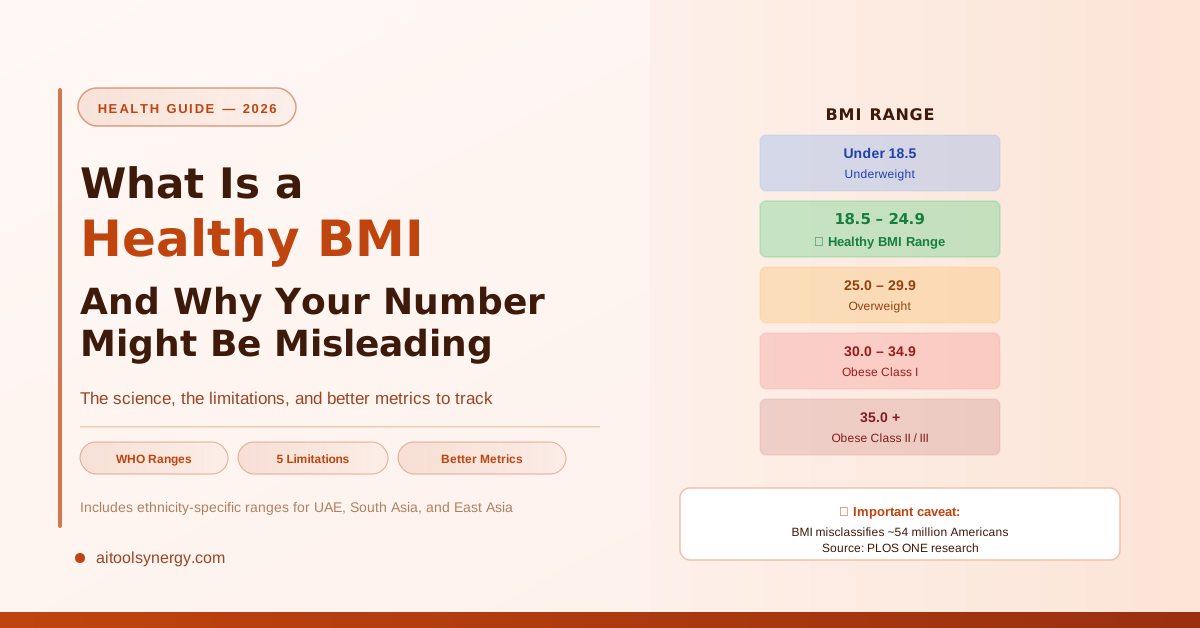
This isn’t a niche edge case. Research published in PLOS ONE found that BMI misclassifies the metabolic health of approximately 54 million Americans — labeling millions of unhealthy people as healthy and millions of healthy people as at risk.
So what is a healthy BMI, exactly — and how much should you actually trust your number? This guide covers the standard ranges the World Health Organization uses, where BMI falls short, which metrics give a more accurate picture of your health, and how to interpret your own number without either dismissing it or overreacting to it.
The Surprising Origin of BMI — It Wasn’t Designed for Healthcare
The BMI formula is almost 200 years old. Belgian mathematician Adolphe Quetelet developed it in the 1830s as part of his work on “social physics” — a statistical attempt to define the characteristics of the “average man.” He called it the Quetelet Index.
Quetelet was not a doctor, was not studying disease risk, and explicitly stated his index was not designed to measure body fat in individuals. It was a population-level statistical tool for studying trends across large groups of people.
The index sat largely outside medicine for over a century. In 1972, physiologist Ancel Keys — best known for his controversial Seven Countries Study — renamed it “body mass index” in a paper published in the Journal of Chronic Diseases. Keys himself acknowledged BMI was the least-bad option for population studies, not a diagnostic tool for individual health assessment.
Despite this, BMI became the default clinical screening tool throughout the 1980s and 1990s, used by doctors worldwide to categorise patients into health risk groups — a purpose its creator never intended and its scientific limitations don’t fully support.
What Is a Healthy BMI? The Official Ranges Explained
Despite its limitations, what is a healthy BMI has a clear official answer. The World Health Organization and Centers for Disease Control and Prevention (CDC) use the following standard classification for adults aged 20 and over:
| BMI Range | Category | Health Implications |
|---|---|---|
| Below 18.5 | Underweight | Increased risk of malnutrition, bone loss, immune issues |
| 18.5 – 24.9 | Healthy weight ✅ | Generally lower risk of weight-related health conditions |
| 25.0 – 29.9 | Overweight | Elevated risk of type 2 diabetes, heart disease, hypertension |
| 30.0 – 34.9 | Obese (Class I) | High risk of metabolic and cardiovascular conditions |
| 35.0 – 39.9 | Obese (Class II) | Very high risk — often requires clinical intervention |
| 40.0 and above | Obese (Class III) | Extremely high risk of serious health complications |
A healthy BMI range of 18.5 to 24.9 is the internationally recognised standard for adults. At this range, the statistical risk of developing weight-related chronic diseases is lowest for the general population.
For children and teenagers, BMI works differently — it’s plotted on age and sex-specific growth charts as a percentile, not a fixed range. A BMI that would be healthy for a 35-year-old woman may not be healthy for a 12-year-old girl of the same height.
The BMI Formula — How Your Number Is Calculated
BMI uses a straightforward calculation. In metric units: divide your weight in kilograms by your height in metres squared.
BMI = Weight (kg) ÷ Height (m)² Example: A person weighing 75kg and standing 1.75m tall: 75 ÷ (1.75 × 1.75) = 75 ÷ 3.0625 = BMI of 24.5 (healthy weight range)
In imperial units (pounds and inches): multiply your weight in pounds by 703, then divide by your height in inches squared.
BMI = (Weight in lbs × 703) ÷ Height in inches² Example: A person weighing 165lbs at 5’8″ (68 inches): (165 × 703) ÷ (68 × 68) = 116,000 ÷ 4,624 = BMI of 25.1 (overweight range)
Doing this manually is straightforward for single calculations, but if you want to track changes over time or check multiple scenarios, our free BMI Calculator handles both metric and imperial instantly, shows which category your result falls in, and requires no sign-up.
Why Your BMI Number Can Be Misleading — 5 Real Limitations
1. It Cannot Distinguish Muscle From Fat
This is the most widely known BMI limitation — and it’s real. Muscle is significantly denser than fat. Two people with identical weight and height can have dramatically different body compositions: one with 10% body fat and one with 40% body fat will have the same BMI.
Athletes, bodybuilders, and highly active individuals almost routinely fall into the “overweight” or even “obese” BMI category despite having very low body fat percentages and excellent metabolic health. This is why many sports physicians and personal trainers consider BMI largely irrelevant for athletic populations.
2. It Ignores Where Body Fat Is Stored
Where you carry fat matters as much as how much fat you carry. Visceral fat — the fat stored around your internal organs in the abdominal area — is significantly more dangerous than subcutaneous fat stored under the skin on hips, thighs, or arms.
Two people with the same BMI can have very different visceral fat levels and therefore very different cardiovascular and metabolic risk profiles. BMI has no mechanism to detect fat distribution — two identical BMI numbers could represent radically different health pictures depending on where the fat sits.
3. The Racial and Ethnic Bias
The original Quetelet Index was developed using data from 19th century European white males. Its thresholds were later calibrated primarily on white Western populations.
Research has consistently shown that these thresholds misapply to other ethnic groups. People of South Asian, East Asian, and Southeast Asian descent face significantly elevated health risks at BMI levels that would be classified as “healthy” by the standard WHO scale. The WHO’s own expert consultation recommended alternative action points for Asian populations: overweight classification at BMI ≥23 and obese classification at BMI ≥27.5, lower than the general population thresholds.
Conversely, some research suggests that people of Black African descent may have lower visceral fat at equivalent BMI levels compared to white populations, potentially making the standard thresholds too aggressive in classifying risk.
4. It Doesn’t Account for Age
The relationship between BMI and health risk changes significantly with age. For older adults — generally those over 65 — a slightly higher BMI (in the range of 25–27) has been associated with protective effects against bone density loss, frailty, and mortality risk.
Many gerontologists now argue that the standard “healthy BMI” range of 18.5–24.9 is too restrictive for older adults, and that maintaining a modest buffer above the standard lower boundary may be beneficial as we age. The ideal healthy BMI for a 70-year-old is different from the ideal for a 30-year-old, even though the formula gives them the same number.
5. Normal Weight Obesity
Perhaps the most clinically significant limitation: a substantial portion of people who fall within the “healthy BMI” range have excess body fat and metabolic dysfunction. This condition — called normal weight obesity (NWO) — affects an estimated 20–30% of people with a “healthy” BMI score.
Research published in Mayo Clinic Proceedings found that individuals with normal BMI but high body fat percentage had significantly elevated rates of metabolic syndrome, cardiovascular risk factors, and insulin resistance — comparable to individuals in the overweight BMI category. Their healthy BMI number was providing a false sense of security.
What BMI Cannot See — Hidden Health Factors
Beyond its measurement limitations, what is a healthy BMI also misses several factors that significantly influence health outcomes:
- Bone density: Heavier bones genuinely weigh more. People with higher bone density will read heavier on a scale — and therefore have a higher BMI — without any additional health risk from that weight.
- Hormonal status: Thyroid function, cortisol levels, insulin sensitivity, testosterone, and oestrogen all significantly affect body composition and fat distribution. BMI captures none of this.
- Fitness level: A sedentary person and an elite distance runner can share an identical BMI. Cardiorespiratory fitness is one of the strongest predictors of long-term health and mortality — and BMI provides no signal about it.
- Metabolic health markers: Blood pressure, fasting glucose, HbA1c, cholesterol ratios, and triglycerides — the actual predictors of cardiovascular and metabolic disease — are entirely invisible to BMI.
- Mental health and lifestyle factors: Sleep quality, stress levels, diet quality, and physical activity patterns are far more predictive of long-term health outcomes than body weight alone.
Better Health Metrics to Use Alongside BMI
BMI is a screening tool, not a comprehensive health assessment. These additional measurements give a significantly more complete picture when used together:
Waist Circumference
Waist circumference is one of the most powerful single measurements for cardiovascular risk. The WHO recommends risk thresholds of 94cm (37 inches) for men and 80cm (31.5 inches) for women as the point where health risk increases. Substantially elevated risk begins at 102cm (40 inches) for men and 88cm (35 inches) for women.
Measure at the midpoint between your lowest rib and the top of your hip bone, while standing and breathing normally. This measurement captures visceral fat far better than BMI does.
Waist-to-Height Ratio (WHtR)
The waist-to-height ratio is calculated by dividing your waist circumference by your height — both in the same unit. The simple guideline: your waist should be less than half your height. A 6-foot (72-inch) man should ideally have a waist under 36 inches.
Multiple peer-reviewed studies have found waist-to-height ratio to be a better predictor of cardiovascular risk than BMI, particularly for people across different ethnic backgrounds. It adjusts for body size in a way BMI doesn’t — taller people naturally have larger frames.
Body Fat Percentage
Body fat percentage directly measures what BMI tries to approximate. General healthy ranges are 10–20% for men and 18–28% for women, though these vary slightly by age and athletic level. Body fat percentage can be estimated through DEXA scans (most accurate), bioelectrical impedance scales, hydrostatic weighing, or the less precise skinfold caliper method.
A person with a “healthy BMI” but 35% body fat and a person with an “overweight BMI” but 15% body fat have very different actual health profiles — body fat percentage tells that story where BMI cannot.
Metabolic Blood Markers
Fasting glucose, HbA1c (3-month blood sugar average), fasting insulin, cholesterol panel (LDL, HDL, triglycerides), and blood pressure provide a direct window into metabolic health. These are the actual risk factors for type 2 diabetes and cardiovascular disease — the conditions BMI is supposedly predicting.
If your BMI falls in the “overweight” range but your metabolic markers are all optimal, you are likely at lower health risk than someone with a “healthy BMI” and poor blood sugar control.
| Metric | What It Measures | Advantage Over BMI | How to Get It |
|---|---|---|---|
| BMI | Weight-to-height ratio | Free, fast, universal | Scale + calculator |
| Waist circumference | Abdominal size | Detects visceral fat | Tape measure |
| Waist-to-height ratio | Central fat proportion | Adjusts for body size | Tape measure + math |
| Body fat % | Fat vs lean mass | Separates muscle from fat | Scale/DEXA/calipers |
| Metabolic markers | Blood glucose, lipids | Direct disease risk | Blood test |
| Cardio fitness | Heart/lung capacity | Strongest mortality predictor | VO2max test or walk test |
Healthy BMI Ranges by Age Group and Ethnicity
The standard 18.5–24.9 healthy BMI range applies to adults aged 20 and over as a general guideline. But important variations apply depending on age and ethnic background.
BMI for Adults (Age 20 and Over)
The WHO standard healthy range (18.5–24.9) applies to most adults of European and non-Asian descent. Use these as a starting point but factor in your body composition and metabolic markers for a complete picture.
BMI for Asian Populations
The WHO Expert Consultation on BMI in Asian Populations found that people of Asian descent face meaningfully elevated health risks at lower BMI levels than the general thresholds suggest. The recommended alternative action points for Asian adults:
| BMI Range | Category (General) | Category (Asian Populations) |
|---|---|---|
| Below 18.5 | Underweight | Underweight |
| 18.5 – 22.9 | Healthy weight | Healthy weight |
| 23.0 – 24.9 | Healthy weight | ⚠ Increased risk (at-risk zone) |
| 25.0 – 27.4 | Overweight | Moderate obese risk |
| 27.5 and above | Overweight/Obese | High obese risk |
This is particularly relevant for the Pakistani, Indian, Filipino, and other South and Southeast Asian communities who make up a significant portion of expat workers in the UAE, Saudi Arabia, and globally.
BMI for Older Adults (65 and Over)
Research increasingly supports a slightly higher healthy BMI range for older adults. Studies in geriatric medicine suggest that a BMI of 25–27 in people over 65 may offer protective benefits against frailty, hip fracture, and mortality risk — the “obesity paradox” observed in elderly populations. Discuss with a physician before interpreting BMI results in this age group.
BMI for Children and Teenagers
BMI for children (ages 2–19) is not interpreted using fixed ranges. Instead, it is plotted as a percentile against age and sex-specific growth charts. A BMI at the 75th percentile for a 10-year-old boy means something very different from a BMI at the 75th percentile for a 16-year-old girl.
How to Calculate Your BMI Right Now — Free Tool
Knowing what is a healthy BMI is one thing — knowing your own number and what it actually means for you is another. Our free BMI Calculator gives you your BMI result in both metric and imperial, shows which WHO category your result falls in, and takes less than 30 seconds to use.
Enter your height and weight, see your result, then come back to this section to interpret it in context:
- If your BMI is below 18.5: Speak with a doctor. Underweight status carries real health risks including bone density loss, immune suppression, and cardiovascular effects. This is not a number to dismiss.
- If your BMI is 18.5–24.9: Your weight is in the standard healthy range, but check your waist circumference and, if possible, ask your doctor about metabolic markers at your next check-up. Remember the 20–30% of people with normal BMI who still have excess body fat.
- If your BMI is 25–29.9: The overweight classification increases statistical risk — but context matters significantly. Check your waist-to-height ratio, consider your body composition, and look at your metabolic markers before drawing conclusions.
- If your BMI is 30 or above: Clinical obesity classification warrants a conversation with a healthcare provider. This doesn’t mean you are unhealthy — especially if you are highly muscular — but it’s worth discussing with a professional who can assess you in full.
Calculate Your BMI in 30 Seconds — Free
Enter your height and weight to see your BMI number, which category it falls in, and what it means. Works in both metric and imperial. No sign-up required.
Calculate My BMI Now →What to Do If Your BMI Doesn’t Look Right
If your BMI places you in a category that doesn’t feel consistent with how you feel, how you eat, or how active you are — trust that instinct enough to look further.
If you suspect your BMI is too high due to muscle mass: Check your waist circumference and waist-to-height ratio. If both are within normal range and your metabolic blood markers (blood sugar, cholesterol, blood pressure) are healthy, the BMI number is likely less meaningful in your specific case. An athletic body composition with a high BMI and low metabolic risk is a well-documented phenomenon.
If you suspect your BMI is within healthy range but you feel unwell: This is where normal weight obesity becomes relevant. If you’re experiencing fatigue, blood sugar fluctuations, or other symptoms, ask your doctor for a full metabolic panel. A healthy BMI number does not rule out metabolic dysfunction.
If you are of South or East Asian descent: Use the lower WHO action point thresholds discussed earlier. Your healthy BMI window may be narrower than the general standard, and discussing this with a physician familiar with ethnicity-specific guidelines is worth doing.
According to the National Heart, Lung, and Blood Institute (NHLBI), BMI is best used as one of several screening tools rather than as a standalone diagnostic measure. Any significant health concern should involve a qualified healthcare provider who can assess your full clinical picture — not just your height-to-weight ratio.








One Response
[…] Best Cutoff Time HealthCaffeine Half Life Calculator — How Long Does It Stay in Your System? HealthWhat Is a Healthy BMI — And Why Your Number Might Be Misleading HealthHow to Build a Morning Routine for Success That Actually […]