


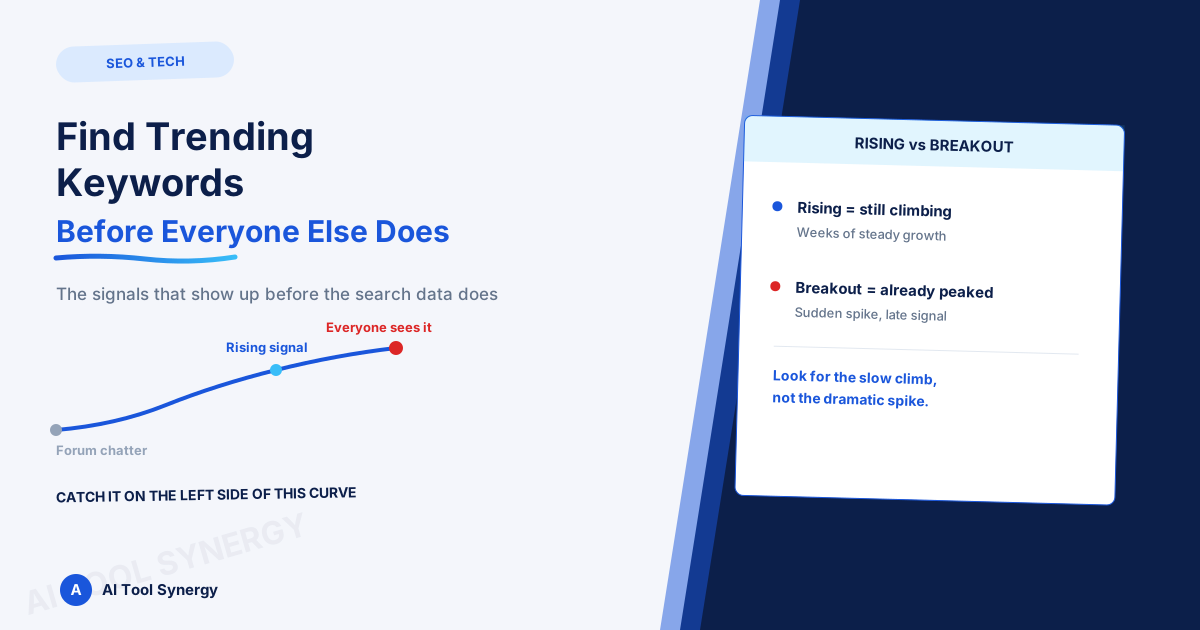
How to Find Trending Keywords Before Competitors
By the time a keyword shows up as “trending” in most standard tools, a meaningful number of other sites have often already spotted it and started publishing. If you want to know how to find trending keywords before competitors, the real skill isn’t reading a trends chart — it’s learning to recognize the earliest signals of rising interest, before the spike becomes obvious to everyone watching the same dashboards.
This guide covers how to find trending keywords before competitors by understanding the actual difference between early and late trend signals, where to look before a keyword appears in mainstream trend tools, and how to validate a signal before committing time to content around it.
This matters more for a newer or smaller site than it does for an established publisher. Large sites with high domain authority can publish on an already-obvious trending topic and still rank reasonably well simply due to their existing authority. A newer site trying to find trending keywords before competitors doesn’t have that luxury — the only realistic path to ranking on a competitive trending topic is arriving early, before the search results fill up with content from bigger, more established competitors.
Why Most People Never Find Trending Keywords Before Competitors
Most creators and marketers discover a trending topic the same way: they see a trends dashboard light up, notice the keyword is already climbing, and start writing. The problem is that trend tools report on search behavior that has already happened — by definition, there’s a delay between real-world rising interest and that interest becoming visible in aggregated search data.
This delay is exactly the window competitors with faster processes exploit. If you want to genuinely find trending keywords before competitors, the goal is to catch the signal during that delay window, not after the tool confirms it.
Rising vs Breakout: The Signal That Actually Matters
Most trend tools separate “rising” queries from “breakout” queries, and this distinction is the single most useful thing to understand if you’re trying to move early:
| Signal type | What it means | How early it is |
|---|---|---|
| Rising | Steady, measurable increase in search interest over recent weeks | Earlier — momentum is building but hasn’t spiked yet |
| Breakout | A sudden, dramatic surge (often 5000%+) in a very short window | Late — by the time something is a “breakout,” volume has often already peaked or is peaking |
If your goal is to find trending keywords before competitors, rising signals are where the actual opportunity lives. Breakout keywords get the most attention because the numbers look dramatic, but by the time a keyword breaks out, dozens of other sites are usually publishing on it within days.
Where to Spot Trends Before They Reach Search Data
Search volume is a lagging indicator — by the time people are actively searching a term, the underlying interest usually started somewhere else first. To find trending keywords before competitors, monitor these earlier signal sources:
- Niche forums and communities — Reddit threads, specialized Discord servers, and niche forums often discuss a shift in interest weeks before it shows up as meaningful search volume.
- Social platform conversation volume — a sudden increase in mentions or comments around a topic on social platforms frequently precedes a corresponding rise in search behavior.
- Industry newsletters and press releases — product launches, policy changes, or industry announcements often create predictable future search demand before the audience has caught up.
- Competitor content gaps — if established sites in your niche haven’t covered something yet despite clear early chatter about it, that’s a signal worth acting on quickly.
Using a Keyword Trend Checker to Validate Early Signals
Spotting an early signal from forums or social chatter is only half the process of learning how to find trending keywords before competitors — you still need to confirm there’s real, measurable momentum before investing time in content. This is where a dedicated keyword trend checker earns its place in the workflow: it lets you validate whether a term you’ve noticed anecdotally is actually gaining traction in search behavior, or whether it’s isolated chatter that never translates into search volume.
Run any candidate keyword through the Trendly Keyword Trend Checker and look specifically for a consistent upward trajectory over multiple weeks rather than a single isolated spike — that consistency is what separates a genuine early trend from noise.
Tools and Sources to Find Trending Keywords Before Competitors
Beyond forums and social platforms, a few specific source types consistently surface rising interest before it becomes obvious in mainstream search data:
| Source type | What it reveals | Lead time vs search data |
|---|---|---|
| Niche subreddits/forums | Grassroots interest building around a specific problem or product | 1-3 weeks earlier |
| Industry press releases | Upcoming launches, policy shifts, or announcements with predictable follow-on search demand | Days to weeks earlier, often predictable in advance |
| Competitor “coming soon” content | Signals that established sites already anticipate demand | Days earlier |
| Trend checker rising signals | Confirms momentum is real and measurable, not just anecdotal | Validates the signal, doesn’t originate it |
The practical workflow is to treat the first three as discovery sources and the Trendly Keyword Trend Checker as your validation step — discovery tells you where to look, validation tells you whether it’s worth acting on.
How to Tell a Real Trend From a Temporary Spike
Not every uptick in interest is worth chasing, and part of learning how to find trending keywords before competitors is knowing which signals to ignore. Before committing content resources to a keyword, check for these confirming signals:
Building Content Fast Enough to Capture Early Trends
Finding a trend early is wasted if your publishing process is too slow to capture it before competitors catch up. Speed matters here in a way it doesn’t for evergreen content — a post about how to find trending keywords early that ships two weeks after you spot the signal is competing in an entirely different, much more crowded landscape than one shipped within days. A practical workflow:
- Confirm the keyword’s rising trajectory with a trend checker (not just anecdotal chatter)
- Check existing search results for the term — if the top results are outdated, thin, or from low-authority sites, that’s your opening
- Publish a focused, direct-answer post within days, not weeks, while the trend is still climbing
- Update or expand the post as the trend develops rather than treating it as a one-time publish
Having a repeatable checklist like this ready in advance is what actually lets you find trending keywords before competitors in practice — improvising the process each time a new signal appears wastes the exact time advantage you’re trying to capture.
Mistakes That Stop You From Finding Trending Keywords Before Competitors
Even with the right sources, a few habits consistently prevent people from finding trending keywords before competitors:
- Only checking trend tools weekly instead of monitoring niche communities in between checks
- Chasing every breakout keyword instead of prioritizing rising ones with more room to grow
- Publishing generic content on a trending topic instead of a specific, narrow angle that hasn’t been covered yet
- Waiting for a topic to feel “safe” (i.e., already validated by competitors already ranking) before publishing
- Skipping the validation step entirely and publishing on anecdotal chatter that never translates into real search volume — always confirm with the trend checker first
Seasonal Patterns vs Genuine Emerging Trends
One further distinction worth making when you’re trying to find trending keywords before competitors: not every rising keyword is a new trend — some are simply predictable seasonal patterns repeating from previous years. Recognizing the difference matters because seasonal keywords can be planned for months in advance with historical data, while genuine emerging trends require the real-time monitoring covered throughout this guide.
Comparing a keyword’s current rise against its historical pattern in the same period last year, using the Trendly Keyword Trend Checker, quickly reveals which category you’re dealing with. A keyword that shows the same rise every year at the same time is seasonal and should be planned into your content calendar in advance; one with no historical precedent is a genuine emerging trend worth acting on immediately using the early-signal sources covered above.
Check Any Keyword’s Trend Trajectory Free
Spot rising momentum before it becomes an obvious breakout — free, no signup required.
Try the Free Trendly Keyword Trend CheckerFAQ: How to Find Trending Keywords Before Competitors
Monitor rising (not breakout) search signals, watch niche forums and social platforms for early chatter, and validate momentum with a keyword trend checker before committing to content.
Rising keywords show steady, building interest over weeks — an earlier signal. Breakout keywords show a sudden dramatic surge, which usually means the trend has already peaked or is peaking.
Niche forums, specialized communities, social platform conversation volume, and industry announcements often precede measurable search volume by days or weeks.
Check for sustained multi-week growth rather than a single-day spike, and confirm existing search results on the topic are thin, outdated, or low-authority.
Within days rather than weeks, while the trend is still climbing — the competitive window for early-mover advantage closes quickly once a keyword becomes an obvious breakout.
No. Seasonal keywords follow predictable yearly patterns that can be planned in advance, while genuine emerging trends require ongoing real-time monitoring since they don’t follow a historical pattern.
Yes, a free keyword trend checker can validate whether an anecdotal signal from forums or social chatter is translating into measurable search momentum.
Because breakout status means the surge is already highly visible in trend tools, which means many other sites are likely publishing on it at the same time you notice it.
Finding trending keywords before competitors comes down to watching earlier, less obvious signals instead of waiting for a trends dashboard to confirm what’s already peaked. Combine early signal sources like niche communities and social chatter with a trend checker to validate real momentum, and move fast once you’ve confirmed it.
Related Reading From Authoritative Sources
For further reference, see Google Trends, Google’s official explanation of how Trends data works, Ahrefs’ guide to keyword research, and Backlinko’s keyword research guide.
Explore More Free SEO Tools
Keyword trends, density checkers, domain rating tools and more — all free, no signup required.
Browse SEO ToolsRelated Articles
Explore our full free tools directory or visit the AI Tool Synergy homepage for more free SEO, AI, finance, and creator utilities.