


Caffeine and Anxiety: How Much Is Too Much and When to Cut Back
The relationship between caffeine and anxiety is one of the most under-discussed topics in everyday health. Most caffeine advice is written for healthy adults without anxiety — people for whom 400mg per day is a reasonable guideline. But if you have generalised anxiety disorder, panic disorder, social anxiety, or even a general tendency toward anxiousness, that number is almost certainly too high for you. And the symptoms you have been attributing to stress, poor sleep, or your anxiety disorder may be partly driven by what is in your cup.
This is not about demonising coffee. Moderate caffeine consumption carries documented health benefits even for anxious people. This is about finding the dose and timing that captures the benefits without pushing your nervous system past its threshold — a threshold that sits significantly lower for anxiety-prone individuals than for the general population. Understanding this connection precisely is the first step to managing it.
Caffeine and Anxiety — How Caffeine Triggers the Stress Response
Caffeine and anxiety are physiologically linked through two overlapping mechanisms that activate the same biological pathways as real stress. Understanding both explains why caffeine does not merely “worsen” existing anxiety — it can produce physiological states that are clinically indistinguishable from anxiety itself.
First, caffeine blocks adenosine receptors. Adenosine is a calming neurotransmitter that builds throughout the day, progressively reducing neural excitability and preparing the brain for sleep. Caffeine occupies adenosine receptors without activating them, removing this brake on neural activity. The result is heightened excitability across multiple brain regions — including those involved in threat detection and fear processing. For an anxious person whose threat-detection circuitry is already hyperactive, removing adenosine’s dampening effect is like releasing the handbrake on an already accelerating car.
Second, caffeine triggers adrenaline release. Within minutes of consumption, caffeine stimulates the adrenal glands to release adrenaline (epinephrine) — the primary hormone of the fight-or-flight response. Heart rate increases. Blood pressure rises slightly. Muscles receive a surge of blood flow. The pupils dilate. In a person without anxiety, this is experienced as energising alertness. In a person with an anxiety disorder, this identical physiological state is experienced as anxiety, panic, or dread — because their nervous system is already primed to interpret sympathetic arousal as threat.
Caffeine and Anxiety — What the Research Actually Shows
The clinical evidence on this topic is more robust than most people realise. The relationship has been studied extensively, including in well-controlled double-blind randomised trials.
A systematic review published in PLOS ONE analysed multiple studies on caffeine intake and anxiety risk, finding that low-dose caffeine moderately increased anxiety risk (SMD = 0.61) while high-dose caffeine produced a highly significant increase (SMD = 2.86) — confirming a dose-dependent relationship. Even in people without diagnosed anxiety disorders, doses above 400mg per day significantly elevated anxiety symptoms.
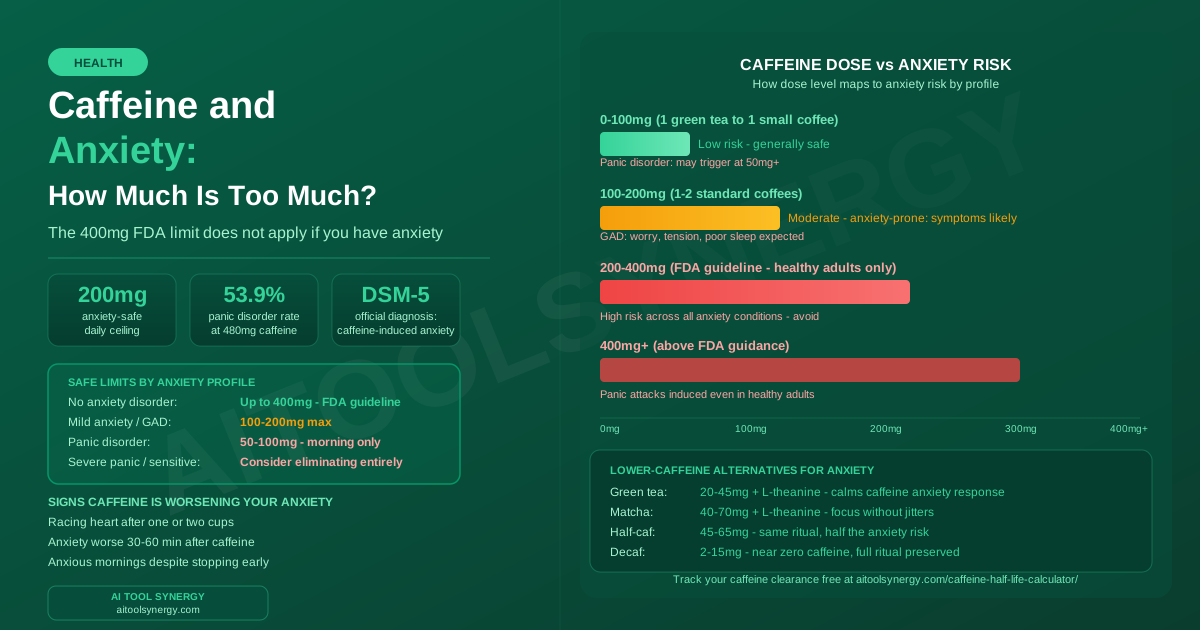
The most striking findings involve panic disorder specifically. A landmark double-blind challenge study administered 480mg of caffeine — roughly five cups of coffee — to participants with panic disorder and healthy controls. Among those with panic disorder, 53.9% experienced a panic attack following caffeine ingestion. Among healthy controls, only 1.7% experienced panic symptoms. None of the participants who received a placebo (caffeine-free coffee) had a panic attack in either group. The researchers concluded that caffeine is a reliable panic-inducing agent in panic disorder patients at doses that are within normal consumption range for regular coffee drinkers.
For generalised anxiety disorder (GAD), the picture is somewhat different but still clinically significant. High caffeine doses do not typically trigger full panic attacks in GAD patients, but they reliably amplify core GAD symptoms — persistent worry, muscle tension, restlessness, and sleep disruption — creating a feedback loop where caffeine worsens anxiety, anxiety worsens sleep, and poor sleep increases the perceived need for more caffeine the next day.
Caffeine and Anxiety — How Much Is Too Much for Anxious People
The FDA’s 400mg daily guideline was established for healthy adults without anxiety disorders. It is not appropriate for anxiety-prone individuals, and clinical psychiatrists consistently recommend lower thresholds for their patients. Here is how the evidence maps onto practical limits by anxiety profile:
| Anxiety Profile | Recommended Daily Limit | Why This Threshold | What to Monitor |
|---|---|---|---|
| Healthy adult, no anxiety | Up to 400mg | FDA guideline for general population | Sleep quality, heart rate at high doses |
| Mild anxiety tendency | 200-300mg | Anxiety symptoms emerge for many at 200mg+ | Jitteriness, restlessness after each cup |
| Generalised Anxiety Disorder (GAD) | 100-200mg | Caffeine amplifies GAD core symptoms reliably | Worry intensity, muscle tension, sleep onset |
| Social anxiety disorder | 100-200mg | Physical arousal symptoms misinterpreted as social threat | Heart rate and blushing in social situations |
| Panic disorder | 50-100mg maximum | Panic attacks induced at 480mg in 53.9% of patients | Any chest tightness, shortness of breath |
| On SSRIs or SNRIs | 100-200mg | Some interactions affect caffeine metabolism and anxiety response | Consult prescribing doctor about specific medication |
How to Tell If Caffeine Is Making Your Anxiety Worse
The challenge with this relationship is that many people attribute all their symptoms to their anxiety disorder and never consider that caffeine is amplifying — or even generating — some of what they are feeling. The following checklist helps identify when caffeine is a meaningful contributor to your anxiety burden.
If four or more of these apply consistently, caffeine is very likely a meaningful amplifier of your anxiety symptoms. A two-week trial of significantly reduced caffeine — targeting under 100mg per day — will typically reveal within 5–7 days (after the initial withdrawal adjustment) whether caffeine has been contributing to your anxiety load.
Caffeine and Anxiety — The Caffeine-Induced Anxiety Disorder Diagnosis
Many people are surprised to learn that the clinical link between caffeine and anxiety is formally recognised in psychiatric diagnostic criteria. Caffeine-induced anxiety disorder is an official diagnosis in the DSM-5 — the American Psychiatric Association’s Diagnostic and Statistical Manual of Mental Disorders — classified as a subtype of substance/medication-induced anxiety disorder. It is also recognised in the ICD-11.
The DSM-5 diagnosis requires that the anxiety or panic symptoms are a direct pharmacological result of caffeine use, occur during or shortly after consumption, and cause clinically significant distress or functional impairment. This distinction matters because caffeine-induced anxiety disorder is fully treatable through caffeine reduction alone — without medication or psychotherapy — once the causal relationship is identified. Many people receiving treatment for what they believe is primary anxiety disorder are unknowingly treating a condition that caffeine is substantially maintaining or triggering.
As reported by UCLA Health, in studies involving more than 235 people, over 50% of participants experienced panic attacks following high-dose caffeine consumption, with 98% of those having previously experienced panic attacks. None of the placebo recipients had attacks. This represents one of the most consistent cause-and-effect relationships in psychiatric pharmacology research.
Caffeine and Anxiety — Why Timing Matters as Much as Dose
Even at doses below the anxiety threshold, the timing of caffeine consumption significantly affects its anxiety impact. Two mechanisms make afternoon and evening caffeine particularly problematic for anxious individuals:
Sleep disruption amplifies anxiety. Caffeine consumed too late in the day reduces slow-wave sleep and delays REM onset — even when you fall asleep at a normal time. Sleep deprivation is one of the most potent amplifiers of anxiety available: a single night of poor sleep measurably increases amygdala reactivity (the brain’s threat-detection centre) and reduces prefrontal cortex regulation of emotional responses. This means late caffeine that costs you even 45 minutes of deep sleep may produce more anxiety the next day than the immediate stimulant effect of the coffee itself. Our detailed guide on how caffeine affects sleep covers this mechanism in full.
Cortisol stacking in the morning. Drinking coffee immediately after waking — during the cortisol awakening response peak — stacks two stimulant signals simultaneously, producing a larger adrenaline and cortisol surge than either would alone. For anxious people, this early-morning double-hit is often what produces the jitteriness and unease they associate with “morning anxiety.” Delaying the first coffee 60–90 minutes after waking — as covered in detail in our guide on the best time to drink coffee for energy — allows the natural cortisol peak to subside before adding caffeine’s stimulation.
For people managing caffeine and anxiety together, the combined strategy of dose reduction and timing optimisation is significantly more effective than either alone. Cutting from 400mg to 200mg while also shifting the last coffee to before noon produces a substantially different anxiety experience than dose reduction alone, because the sleep quality improvement compounds the direct dose reduction benefit.
Use the free caffeine half-life calculator to model exactly how much caffeine is active in your system at various points in the day — including at bedtime — based on what you drink and when. For slow metabolisers with anxiety, seeing that a 3pm coffee still has 50–80mg active at midnight is often the clearest motivation to move the cutoff time earlier.
Caffeine and Anxiety — How to Cut Back Without Making Anxiety Worse
One of the most counterintuitive aspects of managing caffeine when you have anxiety is that cutting back on caffeine can temporarily worsen anxiety before it improves. This is caffeine withdrawal — a recognised physiological process that includes headache, fatigue, irritability, difficulty concentrating, and in some individuals, a transient spike in anxiety symptoms as the nervous system adjusts to reduced adenosine receptor blockade.
Sudden caffeine elimination is the approach most likely to produce severe withdrawal and the most likely to fail. The evidence-based approach is a graduated taper that gives the brain time to downregulate adenosine receptor density gradually. Here is a practical schedule:
| Week | Target Daily Caffeine | Practical Swap | What to Expect |
|---|---|---|---|
| Week 1 | Reduce by 25% from baseline | Remove one cup or switch one to half-caf | Mild headache possible — brief |
| Week 2 | Reduce by another 25% | Morning coffee only — switch afternoon to green tea | Energy dip mid-afternoon — expected |
| Week 3 | Target 100-150mg | One standard coffee before 10am, herbal tea after | Anxiety may already show improvement |
| Week 4+ | Maintain or reduce to 50-100mg | Switch to green tea or matcha as primary caffeine | Sleep and anxiety typically measurably better |
Key tactics that reduce withdrawal severity: stay hydrated throughout (caffeine is mildly diuretic — dehydration amplifies withdrawal headaches), maintain consistent sleep timing, use standard over-the-counter pain relief for withdrawal headaches rather than caffeine-containing analgesics (which perpetuate the cycle). Use our free caffeine half-life calculator to track your intake accurately as you taper (which perpetuate the cycle), and keep meals regular to stabilise blood sugar (low blood sugar amplifies withdrawal fatigue).
Lower-Caffeine Drinks That Reduce Anxiety Risk
Reducing caffeine does not have to mean sacrificing all energy and alertness. Several lower-caffeine alternatives provide meaningful alertness support with significantly less anxiety risk. The key advantage of some of these sources is L-theanine — an amino acid found in tea that modulates caffeine’s stimulant effect, reducing the anxiogenic peak while preserving the focus benefit.
For people with significant anxiety who want to keep some caffeine in their routine, the combination of switching from coffee to green tea or matcha and limiting consumption to the morning hours often produces a notable reduction in anxiety symptoms within 1–2 weeks — without requiring complete elimination. The L-theanine in tea is a genuinely meaningful variable: studies show it increases alpha brain waves (associated with calm alertness) and reduces the cortisol response to caffeine.
Caffeine and Anxiety — When to Talk to a Doctor
Most caffeine-related anxiety is self-manageable through the dose and timing adjustments described in this guide. However, some situations warrant professional guidance rather than self-management.
Seek medical evaluation if: anxiety symptoms persist or worsen despite two to three weeks of significant caffeine reduction; you experience chest pain, shortness of breath, or heart palpitations lasting more than a few minutes; you have a diagnosed heart condition and notice cardiac symptoms following caffeine consumption; withdrawal symptoms from caffeine reduction are severe or prolonged; or you suspect your caffeine use has become compulsive — you drink caffeine despite clearly negative consequences and find you cannot stop despite wanting to.
As noted by the Cleveland Clinic, genetic testing is available that identifies CYP1A2 and ADORA2A variants related to caffeine metabolism and anxiety sensitivity — though most clinicians recommend behavioural reduction first before pursuing genetic testing, since the practical response is identical in either case: reduce caffeine and observe symptom response.
It is also worth noting that caffeine and anxiety have a bidirectional relationship — anxiety disorders can cause people to use more caffeine to manage fatigue from poor anxiety-related sleep, which then worsens the anxiety, which worsens the sleep. Breaking this cycle sometimes requires addressing both the caffeine and the underlying anxiety simultaneously, which is where a mental health professional adds value beyond what dietary changes alone can achieve.
Caffeine and Anxiety — Understanding Your Personal Half-Life
One frequently overlooked dimension of caffeine and anxiety management is how long caffeine actually stays in your system. The population average is 5 hours per half-life — meaning 200mg consumed at noon still has roughly 50mg active at 10pm for an average metaboliser. For a slow metaboliser with a 7-8 hour half-life, that same noon coffee has 100mg active at 8pm and 50mg active at midnight.
For anxious individuals, this extended overnight caffeine presence has two distinct negative effects. First, it directly contributes to the sleep disruption that amplifies next-day anxiety. Second, it means the morning anxiety many people experience may partially reflect caffeine still active from the previous day — creating a pattern where the person reaches for more caffeine to counter the fatigue from caffeine-disrupted sleep, perpetuating the cycle.
Understanding your personal caffeine half-life — and applying it to your cutoff time — is the most precise way to break this pattern. Our free caffeine half-life calculator calculates exactly how much caffeine is active in your system at bedtime based on your age group, metaboliser type, and drinks consumed that day. For more detail on the half-life mechanics and how they vary by age and other factors, see our caffeine half-life calculator guide. And for the specific sensitivity factors that affect how strongly you react to a given dose, see our guide on why some people are so sensitive to caffeine.
Caffeine and Anxiety — Summary: The Practical Playbook
The link between caffeine and anxiety is real, dose-dependent, and clinically significant. The 400mg FDA guideline for healthy adults is not appropriate if you have an anxiety disorder. For GAD patients, 100-200mg is a more realistic ceiling. For panic disorder patients, 50-100mg may be the limit before symptoms emerge. For all anxiety-prone individuals, timing matters as much as dose — morning-only consumption and an early afternoon cutoff reduces anxiety impact significantly beyond dose reduction alone.
The practical steps: identify which of the checklist symptoms apply to you, reduce caffeine by 25% per week rather than going cold turkey, shift to lower-caffeine L-theanine-containing sources like green tea or matcha for any afternoon caffeine, and use the free caffeine half-life calculator to pinpoint your personal cutoff time and prevent late-day caffeine from undermining your sleep and amplifying your next-day anxiety.





One Response
[…] baseline nervousness and fewer episodes of heart pounding or jitteriness. The relationship between caffeine and anxiety is dose-dependent — below your personal anxiety threshold, caffeine’s benefits (alertness, […]