


Discover how ai tools for business in 2026 can automate operations, optimize workflows, and drive rapid organic growth across modern digital platforms.
Table of Contents
AI Tools For Business
In the rapidly evolving marketplace of 2026, establishing a commanding market presence requires speed, precision, and continuous operational refinement. Leveraging high-performance ai tools for business provides modern companies with an unmatched edge across digital channels. Search engines and content platforms evaluate context, user intent, technical reliability, and structural accuracy with heightened precision. Implementing intelligent software solutions allows teams to automate complex research, optimize search presence, and scale daily operations without incurring excessive software overhead.
Historically, managing business growth and digital marketing required extensive manual tracking, manual keyword analysis, and tedious content editing. Today, machine learning models compress multi-hour auditing processes into near-instantaneous executions. Web-based software applications evaluate real-time metrics, suggest semantic keyword variations, and measure draft quality against strict search indexing criteria. Integrating these accessible applications into standard operating procedures eliminates operational friction, improves indexation speeds, and positions organizations ahead of competitors reliant on legacy workflows.
This comprehensive guide explores the primary categories of digital software shaping modern enterprise operations this year. By examining how artificial intelligence transforms keyword discovery, technical site health, on-page optimization, and copy generation, your team can construct a resilient growth framework. Exploring curated resource repositories such as AIToolSynergy ensures access to verified applications designed to maximize digital performance and organic reach.
The Evolution of Artificial Intelligence in Enterprise Operations
The role of artificial intelligence in corporate operations has shifted from simple rule-based automation to sophisticated predictive intelligence. A decade ago, organizations used digital tools primarily for basic data logging and manual task scheduling. Today, neural networks process massive datasets continuously, delivering actionable insight into consumer behavior, search intent shifts, and market opportunities.
This technological evolution has fundamentally reshaped how search engines parse and evaluate online assets. Modern search crawlers evaluate natural language context, entity connections, domain authority, and user engagement metrics rather than exact keyword frequencies alone. Achieving high search engine rankings requires publishing authoritative, structurally sound resources that satisfy complex search queries across every subtopic.
For growing enterprises, this operational shift opens remarkable growth channels. Utilizing intelligent web utilities allows small teams to execute research, optimization, and content deployment at scales previously limited to massive corporations. Combining machine learning performance with disciplined human oversight forms the foundation of sustainable digital growth in 2026.
Why Modern Enterprises Depend on ai tools for business
Overseeing enterprise operations involves managing complex site architectures, regular content schedules, and multi-channel marketing campaigns. Executing these tasks manually across expansive web properties invites human error and creates severe operational bottlenecks. Incorporating proven ai tools for business into daily workflows ensures every deployed asset meets strict quality standards while drastically cutting administrative hours.
Efficiency and precision remain essential pillars for building online authority. Automated optimization platforms scan web pages instantly to identify broken redirects, unoptimized media assets, missing metadata, and suboptimal keyword frequencies. Addressing these issues before publication guarantees search engine crawlers process site pages smoothly without technical roadblocks.
Additionally, accessible software platforms democratize digital growth across all business scales. Startups, mid-sized firms, and independent agencies access high-level keyword intelligence, readability checking, and technical auditing without committing to prohibitive software fees. Reallocating saved capital into product development, premium web infrastructure, and strategic partnership campaigns accelerates long-term market expansion.
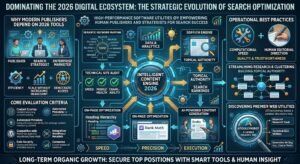
Key Evaluation Criteria for Premier Digital Software
Selecting digital utilities for your enterprise software stack requires careful evaluation to prevent tool bloat and security risks. Adopting applications haphazardly creates fragmented data streams and inefficient workflows. Establishing clear selection parameters ensures that every integrated tool delivers measurable productivity gains.
Primary evaluation factors include keyword suggestion depth, content scoring accuracy, automated metadata creation, and technical audit depth. Software should offer specific, actionable guidance on adjusting heading structures, paragraph lengths, and URL formats. Furthermore, full compatibility with standard WordPress environments and Rank Math frameworks guarantees research translates directly into higher optimization scores on live sites.
Data protection, processing speed, and interface clarity are equally essential. Premier software operates swiftly inside standard web browsers without demanding intrusive account permissions or local software installations. Utilizing trusted discovery hubs like AIToolSynergy simplifies this selection process, guiding your team toward verified web applications designed for stability and technical precision.
Streamlining Keyword Research and Semantic Content Strategy
Keyword research has evolved beyond gathering disconnected search terms with high monthly search metrics. Modern search engines reward sites demonstrating total topical authority—a structured network of articles covering every dimension of a central industry topic. Building these semantic topic clusters requires identifying primary themes, subtopics, and common long-tail search queries.
Artificial intelligence tools excel at mapping semantic keyword relationships. Entering a primary focus keyword yields comprehensive lists of secondary terms, contextual phrases, and searcher intent categories. Incorporating these variations naturally across H2 and H3 subheadings signals deep topical coverage to search crawlers, allowing a single resource to rank for multiple search variations simultaneously.
Furthermore, intelligent keyword utilities help businesses classify search intent accurately into informational, transactional, commercial, or navigational buckets. Aligning content layout with target search intent reduces bounce rates, improves user session duration, and drives higher conversions by satisfying visitor expectations.
Automating On-Page Metadata, Headings, and Rank Math Compliance
On-page optimization functions as the primary structural communication channel between site content and search indexing bots. Elements such as meta titles, meta descriptions, H1 titles, URL slugs, and image alt attributes define explicit page topics. Automating the creation and validation of these elements guarantees consistent compliance with on-page SEO standards across all published pages.
Standard WordPress SEO tools like Rank Math evaluate page quality based on strict structural checks. To achieve top Rank Math scores, articles must feature the focus keyword in the opening paragraph, include the keyword naturally in main H2 subheadings, maintain ideal keyword density without stuffing, and feature concise meta descriptions under 160 characters. AI metadata utilities produce optimized titles and descriptions fulfilling these exact formatting rules instantly.
Establishing a standardized on-page optimization process ensures every piece of published content meets top technical benchmarks. Clean URL slugs, structured heading hierarchies, and optimized meta tags establish a smooth crawling path for search bots, driving faster indexation and higher organic rankings.
Scaling Copywriting and Marketing Assets with Copy.ai
Maintaining an active, authoritative business portal demands producing significant volumes of well-researched written material. Manual drafting, outlining, and editing often create operational friction for internal marketing teams. Integrating generative writing utilities into drafting workflows resolves bottlenecks and supports steady publishing calendars.
Advanced generative software allows writers to input core focus keywords, audience parameters, and layout directives to produce detailed article outlines, compelling introductions, full body paragraphs, and logical conclusions within seconds. For organizations aiming to expand copy output while upholding brand voice, platforms like Copy.ai Tools offer versatile solutions tailored for marketing copy and content generation.
Beyond initial draft creation, AI writing platforms assist in rephrasing technical phrasing, polishing readability, and expanding thin sections. Utilizing automated drafting software lets editors concentrate on fact-checking, brand tone alignment, and incorporating proprietary case studies, producing authoritative articles optimized for search algorithms and human audiences.
Technical Auditing and Infrastructure Optimization
While engaging written content drives audience reach, technical infrastructure provides the essential foundation for search engine indexing. If an enterprise portal experiences slow loading times, uncompressed visual assets, broken redirects, or mobile display errors, search crawlers may throttle crawl frequency, suppressing rankings across the entire domain.
No-cost technical audit applications allow webmasters to perform full domain scans quickly, identifying Core Web Vitals issues, page speed lags, and accessibility bugs. Web-based image compression utilities shrink media asset file sizes significantly without degrading visual fidelity, resulting in faster page rendering and improved mobile user retention.
Performing routine technical audits ensures your digital infrastructure remains fully aligned with search engine performance criteria. Incorporating web-based maintenance utilities into regular operations guarantees search bots easily access, parse, and rank site assets without technical friction.
Discovering Premier Software Assets on AIToolSynergy
As the global ecosystem of web applications, browser utilities, and automation tools expands, discovering reliable software assets can consume valuable hours. Navigating unverified online directories often leads to bloated software, intrusive ads, or unexpected paywalls. Utilizing curated software repositories simplifies discovery, connecting organizations directly with reliable web utilities.
Portals like AIToolSynergy serve as centralized discovery hubs for digital marketers, SEO managers, and corporate operations leads seeking specialized web software. These directories organize software assets by function, offering clear feature summaries and direct access to applications meeting modern web standards. Using a trusted resource directory cuts research time and ensures your team adopts software built for professional execution.
Combining curated discovery platforms with generative platforms like Copy.ai Tools empowers your business to build a complete publishing and optimization pipeline. Utilizing curated software hubs guarantees your technical optimization, keyword research, and copywriting workflows remain synchronized and effective.
Operational Best Practices for Maintaining Quality and Authenticity
While artificial intelligence offers remarkable speed and computational power, relying entirely on unedited automated output carries quality risks. Over-automated content can produce repetitive phrasing, awkward keyword placement, and generic text that fails to provide true value to visitors. Search engines actively penalize low-effort, mass-produced text lacking genuine human expertise.
To safeguard domain authority and brand credibility, treat artificial intelligence as a supportive assistant rather than a total replacement for human experience. Use AI tools to collect keyword metrics, construct article frameworks, draft meta options, and run technical checks. Always ensure experienced human editors review every piece of draft text to verify facts, add unique commentary, adjust tone, and polish sentence flow prior to publication.
Furthermore, confirm that integrated software tools follow clear privacy and security guidelines. Ensure browser applications handle data securely and adhere to web standards. Balancing machine efficiency with authentic human editorial direction ensures content remains engaging, trustworthy, and set for sustained search rankings.
Conclusion: Sustaining Digital Dominance in 2026
Navigating the competitive digital landscape of 2026 demands adaptability, technical precision, and strategic adoption of modern web technology. Relying exclusively on manual processes is no longer practical when scaling competitive web assets. By integrating top ai tools for business into your daily workflows, you can automate detailed research, refine on-page metadata, improve technical site health, and scale authoritative content deployment efficiently.
Long-term success in organic search relies on combining computational speed with authentic editorial direction. Utilizing AI applications for research and initial drafting provides the agility required to remain competitive, while human oversight ensures content delivers real value to readers. Explore trusted software directories like AIToolSynergy to build an optimized software stack, enforce strict on-page standards, and secure long-term organic growth for years to come.