

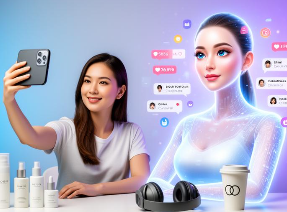
Discover the best free AI tools for creating virtual influencers 2026. Learn face consistency, voice cloning, animation, and growth strategies today.
Table of Contents
Tools for Creating Virtual Influencers
Creating a virtual influencer used to require advanced 3D modeling skills, expensive software, professional animation equipment, and a lot of time. In 2026, that process has become much more accessible. With modern AI image generators, avatar creators, video generators, voice tools, writing assistants, and design platforms, almost anyone can start developing a consistent digital character.
The challenge is no longer simply finding an AI generator. The real challenge is choosing the right Tools for Creating Virtual Influencers for each stage of the workflow.
A successful virtual influencer needs more than a realistic face. You need a recognizable personality, consistent visual identity, engaging captions, believable environments, short-form videos, voice or dialogue, social media graphics, and a publishing strategy. You also need to understand the limitations of free plans, especially watermarks, generation limits, licensing, and commercial-use restrictions.
This guide explains how to build a virtual influencer using accessible AI tools, what each category of tool does, how to create consistent content, and how to structure your workflow without spending a large amount of money.
If you are researching Tools for Creating Virtual Influencers for Instagram, TikTok, YouTube Shorts, Pinterest, or another platform, this guide gives you a practical starting point.
What Is a Virtual Influencer?
A virtual influencer is a fictional or computer-generated digital personality designed to communicate with an online audience.
Unlike a traditional influencer, a virtual influencer does not need to be a real person appearing in front of a camera. The character can be created with AI-generated images, digital avatars, 3D models, animation, synthetic voices, and AI-assisted writing.
The character can have a name, personality, interests, visual style, clothing preferences, background story, and particular communication style.
For example, you could create a fictional fashion personality who posts outfit concepts, a travel character who explores AI-generated destinations, a gaming avatar who discusses games, or a technology-focused digital personality who explains new software.
The important part is consistency.
If the character looks completely different in every post, uses a different personality every day, and has no recognizable identity, the audience may find it difficult to connect with the account.
That is why the best Tools for Creating Virtual Influencers are not necessarily the tools that produce the most impressive single image. The more important question is whether your toolset helps you produce a recognizable character repeatedly.
Why AI Virtual Influencers Are Growing in 2026
AI has dramatically reduced the technical barrier to digital character creation.
Previously, creating a digital personality could involve 3D artists, photographers, video editors, voice actors, animators, and expensive production software. Today, AI can assist with many of those tasks.
Image generation can help create portraits and scenes. Avatar tools can create talking presenters. Video models can animate characters. Voice platforms can provide narration. Writing tools can help generate captions, ideas, scripts, and content concepts.
However, AI should be treated as part of the production process rather than a replacement for creative direction.
Google’s current Search guidance emphasizes helpful, original, people-first content. Google also states that AI-assisted content can appear in Search when it provides value, while using automation primarily to manipulate search rankings can violate spam policies.
For a virtual influencer website or blog, that means the goal should be to provide genuine information, useful tutorials, original analysis, practical examples, and a clear reason for readers to visit.
Tools for Creating Virtual Influencers: What You Actually Need
There is no single application that does everything perfectly.
Instead, think about your virtual influencer as a small digital media brand.
The first requirement is character creation. You need a visual identity that can be reproduced across different images.
Next comes content production. Your character needs images, short videos, captions, scripts, thumbnails, backgrounds, and potentially voiceovers.
Then comes editing and publishing. Even excellent AI-generated material often needs human editing before publication.
A practical AI influencer workflow can therefore include an image generator, an avatar or video generator, a design editor, a voice generator, and an AI writing assistant.
For research, planning, and supporting SEO tasks, you can also use free utilities such as those available through AI Tool Synergy. The site currently includes tools for areas such as keyword density, domain analysis, meta tags, URL slugs, AI content analysis, and other creator workflows.
The advantage of combining tools is flexibility. You are not dependent on one platform for every part of your production process.
AI Image Generators for Creating Your Virtual Character
The visual identity is the foundation of a virtual influencer.
You need to decide what your character looks like before producing dozens of posts. Consider facial features, hairstyle, age range, clothing, color palette, body type, photography style, locations, and overall personality.
Modern image generators can help create the initial character concept.
When selecting an image generation platform, look for features that help you maintain visual consistency. Character consistency can be more important than simply producing one beautiful image.
Start by writing a detailed character description.
For example:
A fictional 25-year-old digital fashion creator with dark brown hair, warm brown eyes, natural makeup, minimalist streetwear, and a modern editorial photography style.
You can then expand the prompt with location, clothing, lighting, camera angle, and mood.
The objective is to establish a reusable character profile.
Do not keep changing the description randomly. If the character’s hair, facial structure, clothing style, and photographic aesthetic change in every generation, maintaining a recognizable identity becomes much harder.
Canva for AI Avatar Creation
Canva is particularly useful when you need to turn an AI-generated character into finished social media content.
Canva currently offers an avatar maker and AI face-generation features, along with design tools for social posts and other visual content. Its official avatar page explains that users can create or customize avatars and use them across designs.
Canva is not necessarily the only tool you need to generate your virtual influencer’s face. Its strength is the wider content-production workflow.
You can place your character into a branded template, add typography, create Instagram graphics, design YouTube thumbnails, create story content, and prepare promotional visuals.
This is useful because a virtual influencer needs a recognizable visual system rather than random AI images.
For example, you could create one template for announcements, another for quotes, another for product recommendations, and another for short educational posts.
The character remains the visual centerpiece while the surrounding design creates brand consistency.
AI Video and Talking Avatar Tools
Static images can introduce a virtual influencer, but video is often essential for short-form social media.
AI video tools can animate characters, create cinematic scenes, generate motion, or produce talking-avatar content.
Talking avatar platforms are particularly useful when your virtual influencer needs to speak directly to viewers.
Current 2026 tools include platforms such as HeyGen and Synthesia for avatar-driven video. Their free offerings and limits change over time, so you should always check the current terms before building a production workflow around a free plan. Current industry comparisons show that free avatar plans commonly impose restrictions such as limited video generation, watermarks, or usage limitations.
A talking-avatar workflow can be simple.
First, create your character.
Then prepare a short script.
Next, select an avatar or compatible character workflow.
Add a voice.
Generate the video.
Finally, edit the result for the platform where you intend to publish it.
For TikTok, Instagram Reels, and YouTube Shorts, vertical video is generally the practical format. A short clip with a strong opening can be more useful than a long video with a weak introduction.
Remember that a virtual influencer is ultimately a content brand. AI video should support the character’s personality instead of becoming the entire personality.
AI Voice Tools for Virtual Influencers
Voice can make a digital character feel more recognizable.
A consistent voice can become part of the character’s identity in the same way that clothing, facial appearance, and writing style do.
When choosing a voice tool, consider tone, accent, pacing, emotion, pronunciation, and consistency.
For example, a technology influencer might use a clear and energetic voice, while a luxury fashion character might use a calmer editorial style.
Do not simply select a voice because it sounds impressive. Select one that matches the personality you have already designed.
If you use voice cloning or another person’s voice, make sure you have appropriate permission and rights. Avoid creating deceptive content that could make viewers believe a real person said something they did not say.
Transparency can also be useful. When the audience could reasonably misunderstand how the content was created, clearly identifying the character as virtual or AI-generated can improve trust.
AI Writing Tools for Captions and Scripts
A virtual influencer needs words as well as images.
Captions, video scripts, replies, hooks, descriptions, product explanations, and content ideas all require planning.
This is where AI writing assistants can save time.
Copy.ai’s free AI tools currently includes tools for tasks such as social captions, outlines, paragraph rewriting, grammar, YouTube names, value propositions, and other marketing-oriented writing workflows.
For a virtual influencer, an AI writing tool can help you transform one idea into several formats.
Suppose your character is a fictional travel creator.
One concept could become an Instagram caption, a short video script, a YouTube description, a Pinterest description, and a short community post.
The important step is editing.
AI-generated writing can sound generic when used without direction. Your character should have a distinctive voice. Maybe the personality is humorous, analytical, energetic, calm, curious, or sophisticated.
Create a small style guide for your character.
Define how the character speaks, what words they commonly use, how long captions should be, whether emojis are used, and what topics the character discusses.
That simple document can make AI-assisted writing much more consistent.
How to Create a Virtual Influencer Step by Step
Step 1: Choose a Niche
Start with one clear topic.
Fashion, beauty, travel, gaming, fitness, technology, food, entertainment, education, and lifestyle are possible directions.
A focused niche makes it easier to build an audience because people understand why they should follow the account.
Avoid creating a character who talks about everything.
A virtual influencer can expand later, but the initial identity should be understandable.
Step 2: Create the Character Profile
Give the character a name and define the personality.
Write down the character’s age range, interests, visual appearance, communication style, location or fictional background, favorite topics, and boundaries.
You are effectively creating a brand persona.
This profile becomes the foundation for your future AI prompts.
Step 3: Generate the Character’s First Images
Create multiple portraits and full-body images.
Test different backgrounds and poses, but keep the core appearance consistent.
Save your strongest reference images.
Do not immediately publish the first image you generate.
Create a small library of approved character references so you can compare future generations against them.
Step 4: Establish a Visual Style
Choose your photography or illustration style.
You might use realistic editorial photography, cinematic imagery, anime-inspired artwork, 3D character design, or a stylized digital-human appearance.
The style should match your niche.
A luxury fashion influencer might benefit from editorial imagery, while a gaming character could use a futuristic or illustrated visual style.
Step 5: Create Content Pillars
Instead of posting random content, establish several recurring themes.
For example, a technology virtual influencer could have:
AI tool discoveries.
Weekly technology explanations.
Productivity experiments.
Short tutorials.
Behind-the-scenes AI creation.
Audience questions.
This gives the account structure.
Step 6: Produce Short Videos
Turn selected images and concepts into short videos.
A 15-30 second video can introduce an idea, answer a question, show a transformation, or tell a short story.
The first few seconds matter.
Instead of starting with a long introduction, begin with the main idea.
Step 7: Write Captions
Use AI writing tools to generate drafts, but make the final version sound like the character.
The caption should add context rather than simply repeating what viewers can already see.
Ask a question when appropriate to encourage meaningful discussion.
Step 8: Edit Before Publishing
Never assume that the first AI output is ready to publish.
Check the face, hands, clothing, text, background, voice, pronunciation, transitions, and factual claims.
AI-generated visuals can still contain obvious mistakes.
Human review remains important.
Step 9: Build a Consistent Publishing System
Create a manageable schedule.
You do not need to publish dozens of pieces every day.
A smaller number of useful, consistent posts can be easier to maintain and evaluate.
Track which formats receive meaningful engagement and which ones fail to connect with your audience.
How to Keep Your AI Character Consistent
Character consistency is one of the hardest parts of creating virtual influencers.
Imagine that your character looks one way on Monday and completely different on Friday. Even if every individual image looks attractive, the account loses its identity.
Use a character reference sheet.
Include the character’s facial description, hair, eyes, skin tone, clothing preferences, accessories, photography style, typical poses, and color palette.
Save successful prompts.
When an image produces the correct appearance, record the prompt and relevant settings if the platform provides them.
You can then reuse the same description for future generations.
Another useful technique is to create a small collection of reference images rather than relying on a text description alone.
Consistency can also be improved by keeping your visual style narrow.
If one post is cinematic photography, another is anime, another is a cartoon, and another is a completely different photorealistic style, the character may feel like four different people.
How to Choose the Right Free AI Tools
The word “free” can be misleading.
A tool may allow free generation but restrict resolution, export options, commercial usage, monthly credits, or watermark removal.
That means you should evaluate a free AI tool based on your actual workflow.
If you only need to experiment with character concepts, a limited image generator may be enough.
If you need regular commercial social media production, licensing and usage rights become much more important.
The same principle applies to avatar video.
Current 2026 comparisons show that free avatar plans can have limitations such as watermarks, short video limits, or restrictions around publishing and commercial use.
Always read the current terms before using AI-generated assets for advertising, sponsorships, client projects, merchandise, or other commercial activity.
Free vs Paid AI Influencer Tools
Free tools are excellent for learning.
They allow you to experiment with different character concepts without immediately paying for a large software stack.
They can also be useful when you are developing your first content strategy.
However, paid plans can become useful when your production volume increases.
Paid services may provide higher generation limits, better resolution, additional models, faster processing, more editing features, commercial licensing, or fewer restrictions.
The correct approach is not to purchase everything at once.
Start with a small workflow.
Create a character.
Produce several pieces of content.
Test your audience response.
Then upgrade the specific part of the workflow that is limiting your production.
This can be much more cost-effective than purchasing several subscriptions before knowing what you actually need.
Common Mistakes to Avoid
One of the biggest mistakes is focusing entirely on appearance.
A beautiful AI character is not automatically an interesting influencer.
People follow personalities, stories, information, entertainment, useful recommendations, and communities.
Another mistake is producing repetitive content.
If every post is simply a portrait of the same character standing in front of another background, the account may quickly become boring.
Use different content formats while maintaining the same identity.
A third mistake is ignoring licensing.
Free does not always mean unrestricted commercial use.
Always check the current terms of the tool you are using.
Another issue is deception.
A fictional virtual influencer should not be presented as a real person when that could materially mislead the audience.
Similarly, do not use a real person’s face or voice without appropriate authorization.
Finally, avoid relying entirely on AI-generated information.
If your virtual influencer discusses health, finance, law, politics, or other sensitive topics, factual accuracy and responsible sourcing become particularly important.
Responsible Use of AI Virtual Influencers
AI virtual influencers can be creative and useful, but responsible publishing matters.
Clearly distinguish fictional characters from real people when necessary.
Avoid impersonating celebrities, creators, brands, or private individuals.
Do not create fake endorsements that imply a real person used or recommended something when they did not.
Do not manipulate images or videos in ways designed to deceive viewers about real events.
For commercial campaigns, check the rights associated with the character, images, voices, music, logos, and other assets you use.
This is especially important if the virtual influencer will promote products.
A professional workflow should keep records of where major assets came from and what usage rights apply to them.
Recommended Virtual Influencer Workflow
A simple workflow can look like this:
Character concept → AI image generation → reference library → visual editing → video generation → voice generation → caption/script writing → final editing → publishing → performance analysis.
You can use AI Tool Synergy as a supporting resource for SEO and content-related utilities. Its current collection includes a keyword density checker, domain rating checker, meta tag generator, URL slug generator, AI content detector, token counter, and other free tools.
For writing-related tasks, you can also explore Copy.ai’s free tools, particularly when you need help with captions, outlines, rewriting, grammar, and other marketing copy.
The goal is not to use the maximum number of AI tools.
The goal is to create a workflow where every tool has a specific purpose.
For example, one tool can handle images, another can handle talking videos, another can help with writing, and another can help with final social media design.
This approach keeps the production process easier to manage.
SEO Tips for a Virtual Influencer Website
If you are creating a website around a virtual influencer, do not publish pages simply because you want to target more keywords.
Create pages that answer real questions.
For example, you might publish a detailed guide explaining how virtual influencers work, a tutorial about creating consistent AI characters, a comparison of avatar tools, or a guide to creating social media content with AI.
Use descriptive titles and headings.
Include relevant internal links.
Optimize image ALT text accurately.
Use a clean URL structure.
Write a useful meta description.
Make sure important pages can be crawled and indexed.
Rank Math can help you check many of these on-page elements. Its focus keyword analysis looks at areas including the SEO title, description, URL, beginning of content, headings, image ALT text, keyword usage, and links.
However, Rank Math’s score should be treated as an optimization guide rather than a guarantee of rankings.
Google makes clear that meeting SEO best practices does not guarantee that a page will be crawled, indexed, or shown in Search.
That is why the priority should be useful content first and optimization second.
Why Keyword Stuffing Is Not the Right Strategy
Because this article targets Tools for Creating Virtual Influencers, it is important to use the phrase naturally.
The focus keyword should appear in important areas such as the title, introduction, a relevant H2, and the body where it makes sense.
But repeating the exact phrase in every paragraph would make the article harder to read.
Rank Math itself recommends avoiding excessive use of focus keywords, and its own guidance notes that keyword density should not be overdone.
Google likewise recommends creating content primarily for people rather than content designed mainly to manipulate rankings.
That is why this article uses related phrases naturally, including AI virtual influencer tools, AI avatar generators, virtual characters, AI image generators, talking avatars, AI video tools, digital influencers, and virtual creator workflows.
Frequently Asked Questions
What are the best Tools for Creating Virtual Influencers?
The right Tools for Creating Virtual Influencers depend on what you want to produce. Image generators are useful for character creation, avatar platforms can create talking videos, voice tools provide narration, design platforms help with social graphics, and AI writing tools can assist with captions and scripts.
Can I create a virtual influencer for free?
Yes. You can begin with free AI image, avatar, design, video, and writing tools. However, free plans commonly have restrictions. These can include limited credits, watermarks, lower resolution, shorter videos, or licensing limitations. Always check the current terms before commercial use.
Do I need coding skills?
No. Most modern AI avatar and content-generation platforms are designed for users without programming experience. You can build a basic virtual influencer workflow using web-based tools.
Can Canva create an AI avatar?
Yes. Canva currently provides avatar creation features and AI face-generation functionality. Its official documentation describes creating avatars and using AI avatar applications within its design environment.
Can AI virtual influencers make money?
A virtual influencer can potentially support commercial activities such as sponsored content, affiliate marketing, digital products, brand collaborations, entertainment, or merchandise. However, income is not guaranteed. Success depends on audience interest, content quality, platform rules, commercial rights, and the business model.
Are AI virtual influencers allowed on social media?
AI-generated characters can generally be used for creative content, but individual platforms have their own rules. You should review the current policies of the platform where you publish, particularly around impersonation, synthetic media, advertising, disclosures, and misleading content.
What should I post with a virtual influencer?
You can publish short videos, fictional stories, tutorials, product-related content, educational posts, lifestyle scenes, behind-the-scenes creation content, audience questions, and other formats relevant to your niche.
How do I make my virtual influencer look consistent?
Create a detailed character profile, save successful prompts, use reference images when supported, maintain a consistent visual style, and keep approved character assets in an organized library.
Is AI-generated content good for Google?
AI-generated or AI-assisted content can appear in Google Search when it provides value and follows Google’s Search policies. Google states that the primary concern is quality and helpfulness rather than simply whether AI was involved in production. Content created primarily to manipulate rankings can violate spam policies.
Final Thoughts
Creating a virtual influencer in 2026 is much easier than it was only a few years ago.
You do not need a complete production studio to begin. A carefully selected group of Tools for Creating Virtual Influencers can help you develop a character, produce images, generate video, create voiceovers, write captions, design social graphics, and manage an increasingly professional content workflow.
The most important part, however, is not the number of tools you use.
Your virtual influencer needs a clear identity.
Give the character a recognizable appearance, personality, voice, topic, and visual style. Create useful or entertaining content rather than simply generating attractive images. Review AI outputs before publishing them. Check licensing requirements. Be transparent when appropriate.
For SEO, use the focus keyword naturally and build the article around search intent rather than repeating the phrase mechanically. Rank Math can help you identify on-page opportunities, but a green score alone does not guarantee Google rankings.
Most importantly, create content that people would actually want to read, watch, share, or return to.
That is the foundation for building a sustainable virtual influencer brand with AI.