

Explore how Free SEO Help Tools streamline on-page optimization, boost Rank Math scores, automate metadata, and drive organic traffic growth in 2026.
Table of Contents
Free SEO Help Tools
In the competitive digital ecosystem of 2026, securing first-page positions on search engine result pages requires speed, structural precision, and data-backed execution. Modern search engines evaluate semantic context, topical authority, technical site health, and natural user engagement with refined accuracy. Relying solely on manual processes or outdated keyword insertion tactics is no longer sufficient to scale web traffic. Implementing the Free SEO Help Tools methodology empowers publishers, independent business owners, and digital agencies to analyze search engine algorithms, optimize on-page content structures, generate validated metadata, and accelerate organic growth without incurring massive software expenses.
Historically, managing search engine optimization required hours of manual labor to track keyword metrics, study competitor document structures, and draft custom title tags for every page. Modern web-based utilities compress these multi-hour auditing workflows into near-instantaneous executions. Intelligent software engines evaluate live search trends, identify semantic entity relationships, and score draft copy against strict indexing criteria. Integrating accessible, high-performance applications into your daily publishing pipeline removes operational friction, improves search engine crawling efficiency, and ensures your web assets outpace competitors who rely on legacy workflows.
This comprehensive guide explores the primary categories of digital software shaping search engine performance. By examining how advanced software transforms keyword discovery, technical site health, on-page optimization, and copy generation, your team can construct a resilient growth strategy. Exploring curated software directories such as AIToolSynergy ensures direct access to verified web applications designed to maximize digital visibility, refine technical site health, and drive sustainable organic traffic.
The Strategic Evolution of Search Engine Algorithms and Machine Learning
The role of software utilities in digital publishing and search engine optimization has shifted from simple rule-based task execution to sophisticated predictive modeling. Search engines no longer evaluate web pages based strictly on exact-match keyword frequencies. Modern neural language models analyze conversational context, entity relationships, semantic relevance, and user interaction signals across the global web. To secure top organic positions across competitive search queries, web publishers must deploy detailed, structurally sound resources that address every dimension of a searcher’s intent.
Digital software now serves as a foundational component of both search engine indexing engines and content optimization workflows. Search crawlers evaluate natural language patterns to determine whether an article provides real value to human readers. Simultaneously, content creators use advanced web utilities to align their articles with these algorithmic benchmarks. This alignment ensures published content addresses auxiliary questions, incorporates logical heading hierarchies, and satisfies the explicit search intent behind targeted keywords.
For growing digital enterprises, this operational evolution opens remarkable growth channels. Utilizing intelligent web utilities allows small teams to execute research, optimization, and content deployment at scales previously limited to massive corporations. Combining computational processing speed with disciplined human editorial oversight forms the foundation of sustainable organic growth.
Why Modern Marketers Depend on Free SEO Help Tools
Managing an authoritative web portal requires overseeing complex technical site architectures, strict publishing schedules, and ongoing performance analytics. Executing keyword research, content drafting, meta tag generation, and link auditing manually creates significant operational bottlenecks. Adopting the Free SEO Help Tools methodology allows publishing teams to streamline routine technical checks, accelerating the transition from initial topic concept to indexation.
Efficiency and analytical precision are essential for establishing digital authority in crowded niches. Automated optimization platforms allow creators to analyze top-ranking search engine results instantly, identifying the structural headings, semantic terms, and word counts necessary to satisfy search intent. Automating these preliminary research steps enables creators to devote more cognitive focus to crafting engaging narratives, verifying facts, and delivering unique industry insights.
Furthermore, accessible web-based optimization utilities democratize search engine performance for small businesses, independent publishers, and growing startups. High-end enterprise software subscriptions are no longer mandatory to access actionable keyword intelligence or on-page technical scoring. By relying on lightweight, browser-based applications, creators can maintain professional optimization standards while directing financial resources toward core business development and platform hosting.
Essential Features of Modern Optimization Engines and Rank Math Benchmarks
Evaluating software for your optimization tech stack requires careful consideration to prevent tool bloat, security risks, and fragmented data streams. With thousands of web applications, browser extensions, and SaaS tools available online, selecting platforms that deliver true functionality is critical. Establishing clear evaluation criteria ensures every tool added to your workflow provides measurable productivity gains.
Key evaluation factors include keyword suggestion depth, content scoring accuracy, automated metadata creation, and technical audit capabilities. The software should offer specific, actionable guidance on adjusting heading structures, paragraph lengths, and URL formats. Furthermore, full compatibility with standard WordPress environments and Rank Math frameworks guarantees research translates directly into higher optimization scores on live sites.
Data protection, processing speed, and interface clarity are equally essential. Premier software operates swiftly inside standard web browsers without demanding intrusive account permissions or heavy local software installations. Utilizing trusted discovery hubs like AIToolSynergy simplifies this selection process, guiding your team toward verified web applications designed for stability and technical precision.
Streamlining Keyword Research and Establishing Semantic Content Clusters
Keyword research has evolved beyond discovering isolated search queries with high monthly search volume metrics. Modern search engines evaluate a site’s overall topical authority across an entire subject area. To rank consistently for high-value search terms, publishers must construct topical clusters—groups of interlinked articles that address every aspect of a specific core subject.
Digital research tools excel at mapping these semantic keyword relationships quickly. Inputting a primary seed keyword yields comprehensive lists of related queries, latent semantic indexing terms, and user intent categories. Incorporating these semantic variations naturally throughout your H2 and H3 subheadings signals deep subject expertise to search engine crawlers, allowing a single article to rank for hundreds of related search queries simultaneously.
Additionally, data-driven keyword analysis helps businesses classify search intent accurately into informational, transactional, commercial, or navigational groups. Aligning your page structure with verified search intent reduces bounce rates, increases dwell times, and drives higher conversions by delivering exactly what searchers expect to find.
Automating On-Page Metadata, Headings, and Rank Math Compatibility
On-page optimization serves as the primary structural communication channel between site content and search indexing bots. Elements such as meta titles, meta descriptions, H1 headings, URL slugs, and image alt text define explicit page topics. Automating the creation and verification of these elements guarantees consistent compliance with on-page SEO standards across all published pages.
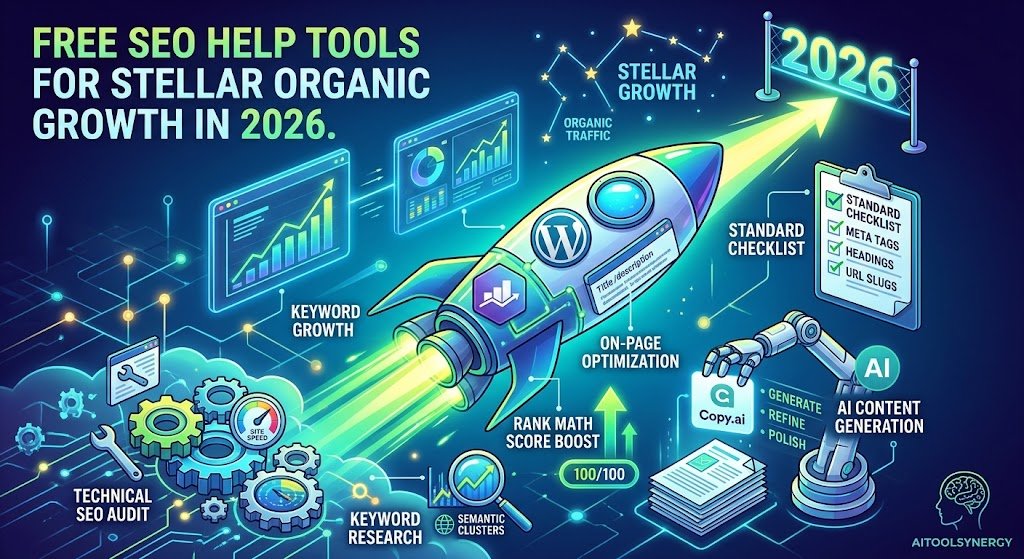
Popular content management system tools like Rank Math evaluate content readiness based on strict structural checks. To achieve top Rank Math scores, articles must feature the exact focus keyword within the first paragraph, include the focus keyword naturally within H2 subheadings, maintain ideal keyword density without over-stuffing, and feature compelling meta descriptions under 160 characters. Metadata utilities produce optimized titles and descriptions that fulfill these exact character and keyword rules instantly.
Establishing a standardized on-page optimization checklist ensures every piece of published content meets top technical benchmarks. Clean URL slugs, structured heading hierarchies, and optimized meta tags establish a smooth crawling path for search bots, driving faster indexation and higher organic rankings.
Accelerating High-Quality Content Production with Copy.ai Platforms
Sustaining an active, authoritative portal demands producing significant volumes of well-researched written material. Manual research, outlining, drafting, and editing often create operational friction for internal marketing teams. Incorporating generative writing software into your drafting phase helps streamline content production and maintain steady publishing schedules.
Advanced generative software allows writers to input core focus keywords, audience parameters, and layout directives to produce detailed article outlines, compelling introductions, full body paragraphs, and logical conclusions within seconds. For organizations aiming to expand copy output while upholding brand voice, platforms like Copy.ai Tools offer versatile solutions tailored for marketing copy and content generation.
Beyond initial draft creation, writing platforms assist in rephrasing technical phrasing, polishing readability, and expanding thin sections. Utilizing automated drafting software lets editors concentrate on fact-checking, brand tone alignment, and incorporating proprietary case studies, producing authoritative articles optimized for search algorithms and human audiences.
Executing Deep Technical Audits and Site Speed Performance Upgrades
While engaging written content drives audience reach, technical infrastructure provides the essential foundation for search engine indexing. If an enterprise portal experiences slow loading times, uncompressed visual assets, broken redirects, or mobile display errors, search crawlers may throttle crawl frequency, suppressing rankings across the entire domain.
No-cost technical audit applications allow webmasters to perform full domain scans quickly, identifying Core Web Vitals issues, page speed lags, and accessibility bugs. Web-based image compression utilities shrink media asset file sizes significantly without degrading visual fidelity, resulting in faster page rendering and improved mobile user retention.
Performing routine technical audits ensures your digital infrastructure remains fully aligned with search engine performance criteria. Incorporating web-based maintenance utilities into regular operations guarantees search bots easily access, parse, and rank site assets without technical friction.
Discovering Verified Web Utilities and Optimization Resources on AIToolSynergy
As the global ecosystem of web applications, browser utilities, and automation tools expands, discovering reliable software assets can consume valuable hours. Navigating unverified online directories often leads to bloated software, intrusive ads, or unexpected paywalls. Utilizing curated software repositories simplifies discovery, connecting organizations directly with reliable web utilities.
Portals like AIToolSynergy serve as centralized discovery hubs for digital marketers, SEO managers, and corporate operations leads seeking specialized web software. These directories organize software assets by function, offering clear feature summaries and direct access to applications meeting modern web standards. Using a trusted resource directory cuts research time and ensures your team adopts software built for professional execution.
Combining curated discovery platforms with generative platforms like Copy.ai Tools empowers your business to build a complete publishing and optimization pipeline. Utilizing curated software hubs guarantees your technical optimization, keyword research, and copywriting workflows remain synchronized and effective.
Operational Best Practices for Maintaining Quality and Avoiding Over-Automation
While advanced software offers remarkable speed and computational power, relying entirely on unedited automated output carries quality risks. Over-automated content can produce repetitive phrasing, awkward keyword placement, and generic text that fails to provide true value to visitors. Search engines actively penalize low-effort, mass-produced text lacking genuine human expertise.
To safeguard domain authority and brand credibility, treat software utilities as supportive assistants rather than total replacements for human experience. Use tools to collect keyword metrics, construct article frameworks, draft meta options, and run technical checks. Always ensure experienced human editors review every piece of draft text to verify facts, add unique commentary, adjust tone, and polish sentence flow prior to publication.
Furthermore, confirm that integrated software tools follow clear privacy and security guidelines. Ensure browser applications handle data securely and adhere to web standards. Balancing technological efficiency with authentic human editorial direction ensures content remains engaging, trustworthy, and set for sustained search rankings.
Conclusion: Dominating Search Engine Results Pages in 2026
Navigating the competitive digital landscape demands adaptability, technical precision, and strategic adoption of modern web technology. Relying exclusively on manual processes is no longer practical when scaling competitive web assets. By integrating Free SEO Help Tools into your daily workflows, you can automate detailed research, refine on-page metadata, improve technical site health, and scale authoritative content deployment efficiently.
Long-term success in organic search relies on combining computational speed with authentic editorial direction. Utilizing software applications for research and initial drafting provides the agility required to remain competitive, while human oversight ensures content delivers real value to readers. Explore trusted software directories like AIToolSynergy to build an optimized software stack, enforce strict on-page standards, and secure long-term organic growth for years to come.